TL;DR
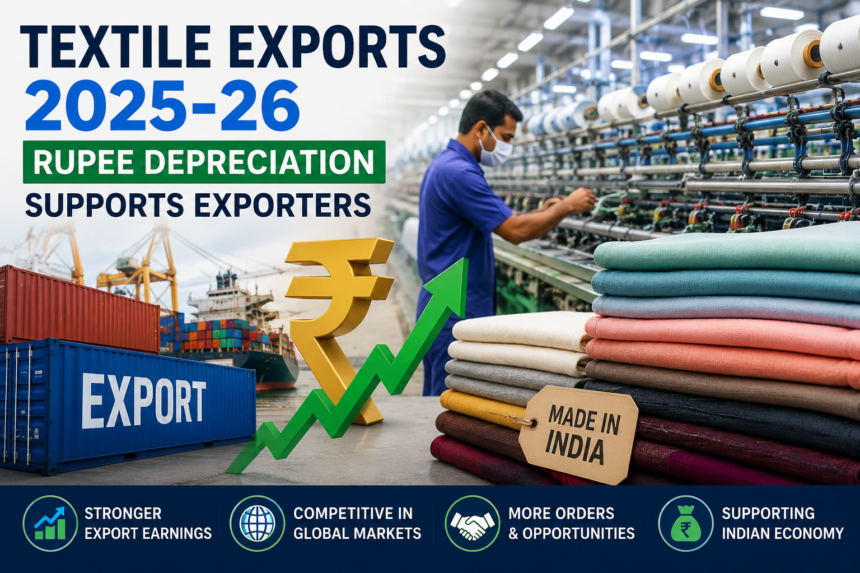
The Textile Exports 2025-26 sector has received a significant boost from the depreciation of the Indian rupee, helping exporters remain competitive in international markets. Industry experts believe favorable exchange rates have improved export earnings and strengthened India’s position in the global textile and apparel trade. The development comes at a time when textile manufacturers are navigating changing global demand, supply chain challenges, and increasing competition from other exporting nations.
Textile Exports 2025-26 Receive Support from Rupee Depreciation
India’s Textile Exports 2025-26 performance has gained attention after industry leaders highlighted how rupee depreciation helped exporters remain competitive in global markets during the financial year.
The textile and apparel sector remains one of India’s most important export industries, contributing significantly to employment, manufacturing output, and foreign exchange earnings. As international trade conditions continue to evolve, currency movements have emerged as a crucial factor influencing export performance.
Industry stakeholders note that the weaker rupee provided exporters with pricing advantages, helping them compete more effectively in major overseas markets.
Follow for more Latest Business News
Understanding the Role of Rupee Depreciation in Export Growth
Currency fluctuations directly impact international trade.
When the Indian rupee depreciates against major currencies such as the US dollar, Indian products become relatively more affordable in global markets.
For Textile Exports 2025-26, this creates several advantages:
- Better price competitiveness
- Improved export realizations
- Enhanced profitability
- Greater global market opportunities
- Stronger export demand
These factors can help exporters secure more orders from international buyers.
Why India’s Textile Industry Matters
The textile industry is one of India’s largest manufacturing sectors and plays a critical role in the economy.
The sector contributes through:
Employment Generation
Millions of people are employed across spinning, weaving, processing, garment manufacturing, and exports.
Export Earnings
Textiles remain one of India’s leading export categories.
Industrial Growth
The sector supports thousands of small, medium, and large enterprises.
Regional Development
Textile manufacturing clusters contribute significantly to local economies.
Cities like Coimbatore, Tiruppur, Erode, and Karur are important contributors to India’s textile success story.
How Textile Exports 2025-26 Benefited from Global Demand
Apart from currency advantages, international demand also influenced Textile Exports 2025-26.
Global buyers continue sourcing products such as:
- Cotton garments
- Home textiles
- Technical textiles
- Yarn products
- Fashion apparel
- Industrial fabrics
India’s reputation for quality manufacturing and competitive pricing has helped maintain its position in international markets.
Read to know more about Ministry of Textiles India
Coimbatore’s Contribution to India’s Textile Export Ecosystem
Coimbatore is often referred to as the textile capital of South India.
The city plays a major role in:
Yarn Production
Coimbatore houses a large number of spinning mills.
Textile Manufacturing
Various textile processing and manufacturing units operate in the region.
Export Supply Chains
The city supports domestic and international textile markets.
Employment Opportunities
Thousands of workers depend on the textile ecosystem.
The success of Textile Exports 2025-26 is highly relevant to Coimbatore’s economy because many local businesses are directly connected to textile production and exports.
Read to know more Coimbatore Industry News
Challenges Facing Textile Exporters
While rupee depreciation provided support, exporters continue to face challenges.
These include:
Global Economic Uncertainty
Changes in consumer spending affect international demand.
Competition from Other Countries
Exporters compete with nations such as Bangladesh, Vietnam, and China.
Rising Input Costs
Raw material and logistics costs remain significant concerns.
Supply Chain Disruptions
Global trade disruptions can impact delivery schedules.
Despite these challenges, the overall outlook for Textile Exports 2025-26 remains positive.
Growing Importance of Value-Added Textile Products
Industry experts believe future export growth will depend increasingly on value-added products.
These include:
- Branded garments
- Technical textiles
- Sustainable fabrics
- Fashion-oriented products
- Performance textiles
By moving up the value chain, exporters can improve margins and strengthen their international presence.
Sustainability Is Becoming a Key Export Driver
Global buyers are paying increasing attention to sustainability.
Many textile companies are investing in:
Eco-Friendly Manufacturing
Reducing environmental impact.
Water Conservation
Improving resource efficiency.
Renewable Energy
Adopting greener production practices.
Sustainable Materials
Using recycled and environmentally friendly fibers.
These initiatives are becoming important factors in securing international orders.
Read to know more about Sustainable Textile Industry Resources
How Exchange Rates Influence Export Competitiveness
Currency movements can significantly impact export performance.
For Textile Exports 2025-26, rupee depreciation helped improve competitiveness by:
- Lowering effective export pricing
- Increasing revenue from foreign markets
- Enhancing global demand potential
- Supporting business profitability
However, industry experts also caution that exchange rate benefits alone cannot guarantee long-term success.
Product quality, innovation, and market diversification remain equally important.
Future Outlook for India’s Textile Sector
The long-term outlook for India’s textile industry remains optimistic.
Growth opportunities are expected from:
Expanding Global Markets
Emerging economies continue to create demand.
Government Support
Various policy initiatives support manufacturing and exports.
Technology Adoption
Automation and digitalization are improving efficiency.
Sustainable Production
Environmentally responsible manufacturing is gaining importance.
The sector is expected to remain one of India’s most important export engines in the coming years.
Follow for more Economic Development News
Why This Matters for Coimbatore Businesses
The growth of Textile Exports 2025-26 has direct implications for Coimbatore.
Local businesses involved in:
- Spinning
- Weaving
- Textile machinery
- Garment manufacturing
- Export logistics
stand to benefit from stronger export performance.
A healthy export sector can generate employment, encourage investment, and strengthen the regional economy.
Global Textile Trade Trends to Watch
Several trends are shaping the future of textile exports worldwide:
- Sustainable fashion
- Digital supply chains
- Nearshoring strategies
- Technical textiles
- Smart manufacturing
- Ethical sourcing
Indian exporters who adapt to these trends may gain additional opportunities in international markets.
Read to know more about World Trade Organization Trade Data
Final Thoughts
The performance of Textile Exports 2025-26 highlights the important role currency movements can play in supporting international trade. Rupee depreciation has provided Indian exporters with a competitive advantage, helping them strengthen their position in global markets.
For textile hubs such as Coimbatore, Tiruppur, and other manufacturing centers, strong export performance translates into economic growth, job creation, and business opportunities. While challenges remain, industry experts remain optimistic about the sector’s long-term prospects.
As global demand evolves and sustainability becomes increasingly important, India’s textile industry will continue adapting to maintain its position as a major player in international trade.
For More news like this, visit Todays Coimbatore News Directory.