TL;DR
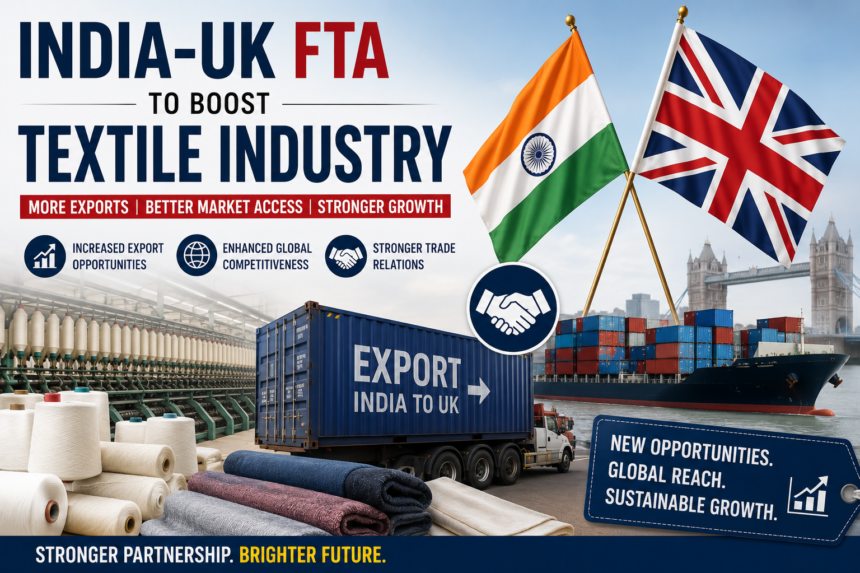
The India-UK FTA Textile Industry outlook is generating optimism across India’s textile and apparel sector. Industry stakeholders believe the implementation of the India-UK Free Trade Agreement (FTA) could strengthen export competitiveness, improve market access to the United Kingdom, and create new opportunities for textile manufacturers, garment exporters, and allied industries. Textile hubs such as Coimbatore and Tiruppur are expected to be among the major beneficiaries if the agreement delivers the anticipated trade advantages.
India-UK FTA Textile Industry Outlook Brings New Hope for Exporters
The India-UK FTA Textile Industry discussion has gained momentum as businesses across India’s textile ecosystem prepare for the potential benefits of the Free Trade Agreement between India and the United Kingdom.
The textile sector remains one of India’s largest employment-generating industries and contributes significantly to export earnings. Industry representatives believe the trade agreement could open new doors for Indian manufacturers by making exports more competitive in the UK market.
For textile-producing regions such as Coimbatore and Tiruppur, the agreement could create fresh growth opportunities and strengthen their position in global supply chains.
Follow for more Latest Textile Industry News
Understanding the India-UK Free Trade Agreement
The India-UK Free Trade Agreement aims to enhance economic cooperation between the two countries by reducing trade barriers and improving market access.
The agreement focuses on several sectors, including:
- Textiles and apparel
- Manufacturing
- Engineering goods
- Technology
- Services
- Agriculture
For the India-UK FTA Textile Industry, reduced tariffs and improved trade conditions could help Indian exporters compete more effectively in the UK market.
Read to know more about the Government of India Commerce Ministry
Why the Textile Industry Is Optimistic About the FTA
Industry leaders believe the agreement could improve the competitiveness of Indian textile products.
Better Market Access
Indian exporters may gain easier entry into the UK market.
Improved Price Competitiveness
Reduced trade barriers could help products remain competitive against exports from other countries.
Increased Export Orders
Improved trade conditions often encourage higher demand from international buyers.
Greater Business Confidence
Trade agreements provide long-term certainty that encourages investment and expansion.
The India-UK FTA Textile Industry is therefore being viewed as a positive development for manufacturers and exporters alike.
Coimbatore and Tiruppur Could Benefit Significantly
Tamil Nadu plays a major role in India’s textile economy.
Coimbatore’s Strength
Coimbatore is known for:
- Textile manufacturing
- Yarn production
- Spinning mills
- Textile machinery
- Technical textiles
Tiruppur’s Global Reputation
Tiruppur remains one of India’s leading knitwear and garment export hubs.
Together, these regions contribute substantially to India’s textile exports.
The India-UK FTA Textile Industry opportunity could help businesses in both cities expand their international presence.
Follow for more Coimbatore Business News Updates
How Textile Exports Drive Economic Growth
The textile sector supports millions of jobs across India.
Its contribution includes:
Employment Generation
From farmers to factory workers, the industry supports a vast workforce.
Export Revenue
Textile exports contribute significantly to foreign exchange earnings.
MSME Growth
Thousands of small and medium enterprises depend on textile manufacturing.
Regional Development
Textile hubs create economic opportunities across entire regions.
The success of the India-UK FTA Textile Industry could therefore have benefits beyond exports alone.
Global Competition in Textile Exports
India competes with several countries in the international textile market.
Major competitors include:
- Bangladesh
- Vietnam
- China
- Turkey
- Pakistan
Industry experts believe trade agreements can help India strengthen its position by improving competitiveness in key markets.
The UK remains an important destination for apparel and textile imports, making the agreement particularly relevant.
Read to know more information about the World Trade Organization Textile Trade Data
Opportunities for Apparel and Garment Exporters
Garment manufacturers are among those expected to benefit from the agreement.
Potential advantages include:
Higher Export Volumes
Improved access may lead to larger order volumes.
Long-Term Buyer Relationships
Competitive pricing can strengthen partnerships with UK retailers.
Product Diversification
Manufacturers may expand product categories for export.
Investment in Expansion
Growing export opportunities often encourage business investment.
These developments could support overall growth in the India-UK FTA Textile Industry landscape.
Why the UK Market Matters
The United Kingdom is one of the world’s major retail and fashion markets.
Demand exists across categories such as:
- Knitwear
- Home textiles
- Cotton garments
- Fashion apparel
- Sustainable textiles
Indian manufacturers are well-positioned to meet these requirements due to strong production capabilities and established supply chains.
Sustainability Could Become a Key Advantage
Global buyers increasingly focus on sustainability.
Indian textile exporters are investing in:
- Sustainable manufacturing
- Water conservation
- Renewable energy
- Ethical sourcing
- Eco-friendly production
The India-UK FTA Textile Industry could encourage further investments in sustainable practices to meet international buyer expectations.
International Trade Centre Textile Sustainability Resources
Challenges That Still Need Attention
While optimism remains high, industry stakeholders recognize that several challenges continue to exist.
Global Economic Uncertainty
International demand can fluctuate.
Rising Production Costs
Energy, logistics, and labor costs remain important considerations.
Supply Chain Management
Maintaining efficient operations is essential.
Compliance Requirements
Exporters must continue meeting international standards.
Addressing these factors will help businesses maximize the benefits of the trade agreement.
What This Means for Coimbatore’s Textile Ecosystem
For Coimbatore, the agreement could create opportunities across the value chain.
Potential beneficiaries include:
- Spinning mills
- Textile machinery manufacturers
- Yarn producers
- Fabric suppliers
- Apparel manufacturers
- Export-oriented businesses
The region’s long-standing expertise in textile production positions it well to capitalize on expanding export opportunities.
Follow for more Coimbatore Industry Updates
Future Outlook for the Textile Sector
Industry stakeholders remain optimistic that improved trade relations can support long-term growth.
Key expectations include:
- Increased exports
- New market opportunities
- Greater investment
- Enhanced competitiveness
- Job creation
- Stronger international partnerships
The India-UK FTA Textile Industry opportunity represents more than just trade—it reflects the potential for broader economic growth across India’s textile ecosystem.
Final Thoughts
The India-UK FTA Textile Industry is expected to bring positive momentum to one of India’s most important manufacturing sectors. With improved market access, stronger export competitiveness, and new opportunities in the UK market, textile manufacturers and exporters are preparing for potential growth.
For textile hubs such as Coimbatore and Tiruppur, the agreement could help strengthen their role in global trade while supporting employment, investment, and industrial expansion. As implementation moves forward, businesses across the sector will be watching closely to understand how these opportunities translate into long-term growth.
For More news like this, visit Todays Coimbatore News Directory.