TL;DR
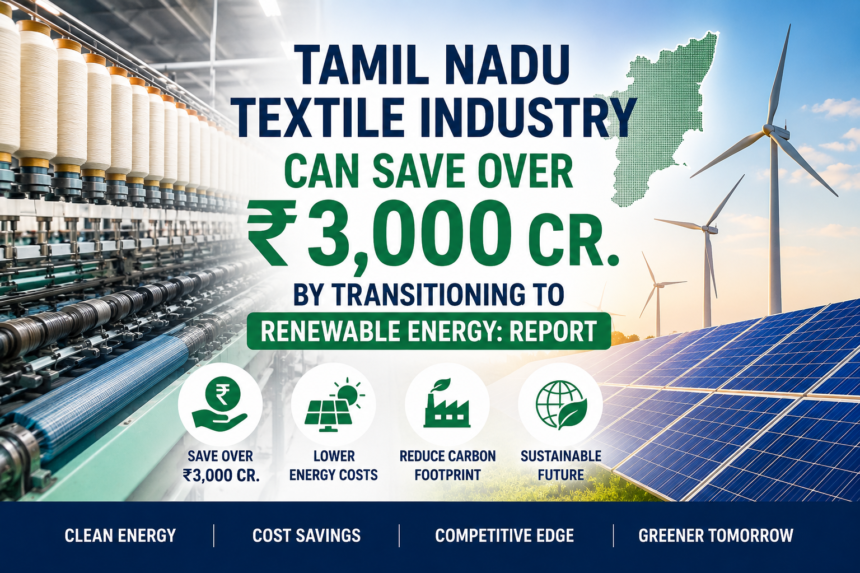
A recent report suggests that the Tamil Nadu Textile Industry Renewable Energy transition could help manufacturers save more than ₹3,000 crore while significantly reducing carbon emissions. The study highlights that India’s textile sector currently has one of the highest carbon footprints among major textile-exporting nations. Since Tamil Nadu and Coimbatore are among the country’s largest textile manufacturing hubs, shifting toward renewable power sources such as solar and wind energy could improve global competitiveness, reduce operational costs, and support sustainability goals.
Tamil Nadu Textile Industry Renewable Energy Shift Could Save Over ₹3,000 Crore, Says Report
The Tamil Nadu Textile Industry Renewable Energy transition is emerging as one of the most significant opportunities for the state’s manufacturing sector. According to a recent report, the textile industry could potentially save more than ₹3,000 crore by adopting renewable energy solutions while simultaneously reducing its environmental impact.
The report points out that India’s textile industry currently records one of the highest carbon footprints among major textile-exporting nations. With increasing pressure from international buyers to adopt sustainable manufacturing practices, the Tamil Nadu Textile Industry Renewable Energy movement is no longer just an environmental initiative—it is becoming a business necessity.
As the textile capital of South India, Coimbatore plays a vital role in this transformation. From spinning mills and garment units to textile processing facilities, renewable energy adoption could reshape the future of the region’s industrial ecosystem.
Get more update to visite todays coimbatore
Why Renewable Energy Matters for the Tamil Nadu Textile Industry
The textile sector is one of India’s largest manufacturing industries and a major contributor to exports. However, textile production requires significant energy for spinning, weaving, dyeing, processing, and finishing operations.
Many textile units continue to depend on conventional energy sources, which contribute heavily to operational expenses and carbon emissions.
The Tamil Nadu Textile Industry Renewable Energy transition offers several advantages:
- Lower electricity costs
- Reduced dependence on fossil fuels
- Improved global competitiveness
- Compliance with international sustainability standards
- Enhanced brand reputation
- Long-term energy security
Industry experts believe renewable energy can become a key driver of growth for textile manufacturers across Tamil Nadu.
India’s Textile Industry Faces Carbon Footprint Challenges
One of the most important findings highlighted in the report is the textile industry’s carbon footprint.
According to the report, India’s textile manufacturing sector emits more than 12.5 kg CO₂ equivalent per kilogram of textile production, which is higher than several competing textile-exporting countries.
Countries such as:
- Vietnam
- Bangladesh
- China
currently maintain lower carbon intensity levels in textile manufacturing.
This has become a growing concern because international buyers increasingly prioritize environmentally responsible supply chains.
As global fashion brands strengthen sustainability requirements, Indian exporters may need to accelerate clean energy adoption to maintain market competitiveness.
Coimbatore’s Role in the Renewable Energy Revolution
When discussing the Tamil Nadu Textile Industry Renewable Energy transformation, Coimbatore naturally becomes a central focus.
Known as the “Manchester of South India,” Coimbatore houses:
- Spinning mills
- Textile machinery manufacturers
- Garment units
- Processing facilities
- Export-oriented textile industries
The city has historically been an industrial powerhouse and has already demonstrated leadership in renewable energy adoption.
Tamil Nadu is one of India’s leading states in wind energy generation, while solar energy investments continue to grow rapidly.
This positions Coimbatore-based textile units to benefit significantly from renewable energy integration.
How Renewable Energy Can Save ₹3,000 Crore
Energy represents one of the largest operational expenses for textile manufacturers.
The report estimates that widespread renewable energy adoption could generate savings exceeding ₹3,000 crore through:
Reduced Electricity Costs
Solar and wind energy can lower long-term power expenses compared to conventional electricity sources.
Lower Fuel Dependency
Renewable energy reduces exposure to fluctuating fossil fuel prices.
Operational Efficiency
Modern energy systems often improve overall energy management and efficiency.
Export Market Advantages
Global buyers increasingly favor suppliers with lower carbon footprints.
Sustainability Incentives
Government support and renewable energy programs can further reduce costs.
These combined benefits contribute to substantial financial savings for the industry.
Growing Global Demand for Sustainable Textiles
The textile industry is undergoing a significant transformation worldwide.
Consumers are becoming more conscious about:
- Environmental impact
- Sustainable sourcing
- Ethical manufacturing
- Carbon emissions
- Renewable energy use
Major international fashion brands are setting ambitious climate targets and expect suppliers to align with sustainability goals.
As a result, the Tamil Nadu Textile Industry Renewable Energy initiative could help local manufacturers strengthen relationships with global buyers.
Sustainability is increasingly becoming a competitive advantage rather than just a regulatory requirement.
Renewable Energy Sources Suitable for Textile Manufacturing
Several renewable energy solutions are already being adopted by textile manufacturers across India.
Solar Energy
Solar power systems installed on factory rooftops can generate substantial electricity for daily operations.
Benefits include:
- Lower electricity bills
- Reduced carbon emissions
- Long-term cost savings
Wind Energy
Tamil Nadu remains one of India’s leading wind energy-producing states.
Many industrial units already participate in wind energy procurement programs.
Hybrid Energy Systems
Combining solar and wind power provides more reliable energy availability throughout the year.
Energy Storage Solutions
Battery systems can help industries manage energy consumption efficiently.
These technologies are expected to play a major role in the future of textile manufacturing.
Sustainability and Export Competitiveness
Global textile markets are evolving rapidly.
International buyers increasingly evaluate suppliers based on:
- Carbon footprint
- Renewable energy usage
- ESG performance
- Environmental certifications
- Sustainable manufacturing practices
Manufacturers that embrace renewable energy can position themselves more favorably in international markets.
For export-focused textile hubs like Coimbatore, sustainability could become a crucial differentiator.
For more about to follow todays coimbatore
Government Policies Supporting Renewable Energy Adoption
India has launched several initiatives aimed at increasing renewable energy adoption across industries.
These include:
- Solar energy promotion programs
- Renewable purchase obligations
- Green energy policies
- Energy efficiency schemes
- Carbon reduction initiatives
Such policies can support the Tamil Nadu Textile Industry Renewable Energy transition by making clean energy investments more attractive.
Industry associations have also encouraged manufacturers to explore renewable energy opportunities to remain globally competitive.
Challenges in Renewable Energy Adoption
While the opportunities are substantial, certain challenges remain.
Initial Investment Costs
Installing renewable energy infrastructure often requires significant capital investment.
Infrastructure Requirements
Some facilities may need upgrades to integrate renewable power systems effectively.
Energy Storage Limitations
Renewable power generation depends on weather conditions, making storage solutions important.
Awareness and Planning
Smaller manufacturers may require technical support to evaluate renewable energy options.
However, experts believe the long-term benefits outweigh these challenges.
What This Means for Coimbatore and Tamil Nadu
The report highlights a significant opportunity for Tamil Nadu’s industrial future.
If renewable energy adoption expands across the textile sector, potential outcomes include:
- Reduced manufacturing costs
- Increased export competitiveness
- Lower carbon emissions
- Greater energy independence
- Improved sustainability rankings
- Stronger industrial growth
For Coimbatore, which serves as a key textile manufacturing hub, the benefits could extend beyond individual companies and contribute to broader economic development.
The Future of Green Textile Manufacturing
The future of textile manufacturing is increasingly linked to sustainability.
Global trends indicate that businesses investing in:
- Renewable energy
- Carbon reduction
- Energy efficiency
- Sustainable production
will likely gain stronger positions in international markets.
The Tamil Nadu Textile Industry Renewable Energy transition represents more than an environmental initiative—it is a strategic economic opportunity.
As industries seek to reduce costs while meeting sustainability expectations, renewable energy is expected to become a central component of textile manufacturing operations.
Conclusion
The latest report highlighting potential savings of more than ₹3,000 crore through renewable energy adoption offers a compelling roadmap for the textile sector.
The Tamil Nadu Textile Industry Renewable Energy movement has the potential to transform manufacturing by reducing operational costs, lowering carbon emissions, and strengthening global competitiveness.
For Coimbatore and Tamil Nadu, where textiles play a critical role in economic growth, embracing renewable energy could support a more sustainable and prosperous future.
As global demand for environmentally responsible manufacturing continues to grow, renewable energy may become one of the most important investments for the next generation of textile industries.