TL;DR
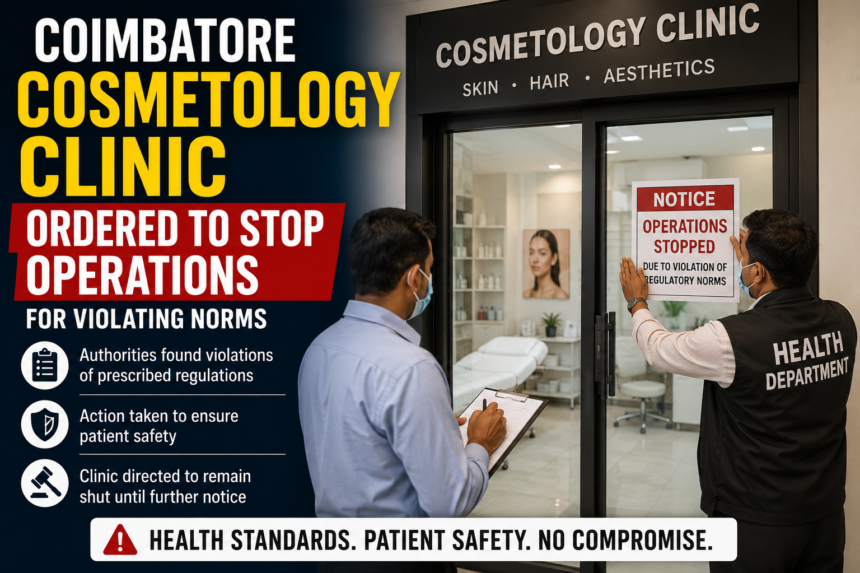
A Coimbatore Cosmetology Clinic has been directed to stop operations after authorities identified alleged violations of prescribed norms and regulatory requirements. The development highlights the importance of compliance, patient safety, healthcare standards, and proper licensing within cosmetic and aesthetic treatment facilities. The incident has also renewed discussions about monitoring private healthcare establishments and ensuring adherence to medical regulations.
Coimbatore Cosmetology Clinic Ordered to Stop Operations Following Alleged Norm Violations
A Coimbatore Cosmetology Clinic has come under scrutiny after authorities ordered it to cease operations over alleged violations of established norms and regulatory requirements. The action underscores the importance of compliance within healthcare and aesthetic treatment facilities, where patient safety and professional standards remain top priorities.
Cosmetology and aesthetic treatment centres have witnessed significant growth in recent years as more individuals seek cosmetic procedures, skincare treatments, and wellness services. However, healthcare experts emphasize that such facilities must operate within regulatory frameworks designed to protect patients and maintain service quality.
The latest action involving a Coimbatore Cosmetology Clinic has therefore attracted attention from healthcare professionals, regulators, and members of the public.
Follow for more news, Latest Coimbatore Health News
Why Regulatory Compliance Matters in Healthcare
Healthcare establishments operate under strict guidelines to ensure safety, quality, and accountability.
Compliance requirements typically focus on:
- Patient safety
- Qualified professionals
- Approved infrastructure
- Record maintenance
- Clinical protocols
- Hygiene standards
When these requirements are not met, authorities may intervene to prevent risks and ensure public safety.
The action taken against the Coimbatore Cosmetology Clinic reflects the importance of maintaining healthcare standards across all treatment facilities.
Growth of Cosmetic and Aesthetic Treatments
The demand for cosmetic procedures has increased considerably over the past decade.
Popular services often include:
Skin Treatments
Procedures aimed at improving skin appearance and health.
Hair Restoration Services
Treatments addressing hair loss and scalp concerns.
Aesthetic Procedures
Non-surgical and minimally invasive cosmetic treatments.
Wellness and Beauty Services
Services focused on enhancing personal appearance.
As the sector grows, healthcare regulators continue to stress the importance of quality control and compliance.
Understanding Healthcare Facility Regulations
Healthcare regulations exist to protect both patients and practitioners.
Key areas generally include:
Licensing Requirements
Facilities must obtain necessary approvals before operating.
Professional Qualifications
Procedures should be performed by appropriately qualified personnel.
Safety Protocols
Facilities must maintain proper safety measures.
Infrastructure Standards
Treatment centres should meet prescribed infrastructure requirements.
These regulations help build trust and ensure consistent healthcare delivery.
Patient Safety Remains the Top Priority
The primary objective of healthcare regulations is to protect patients.
Patient safety involves:
Safe Treatment Practices
Reducing risks associated with medical and cosmetic procedures.
Infection Control
Maintaining hygiene and sterilization standards.
Emergency Preparedness
Ensuring facilities can respond to unforeseen situations.
Transparent Care
Providing clear information regarding treatments and procedures.
The incident involving the Coimbatore Cosmetology Clinic highlights why authorities place strong emphasis on these standards.
Read for more information National Medical Commission Guidelines
Role of Regulatory Authorities
Healthcare regulators play a crucial role in maintaining standards across medical establishments.
Their responsibilities often include:
- Conducting inspections
- Monitoring compliance
- Investigating complaints
- Enforcing regulations
- Protecting patient interests
Regular oversight helps ensure that facilities continue to meet required standards.
Importance of Licensing and Accreditation
Licensing serves as an important indicator that a healthcare establishment meets prescribed requirements.
Benefits of proper licensing include:
Improved Patient Confidence
Patients are more likely to trust regulated facilities.
Quality Assurance
Compliance often reflects adherence to recognized standards.
Accountability
Licensed facilities operate under regulatory oversight.
Professional Credibility
Healthcare providers can demonstrate compliance with industry requirements.
The recent action against the Coimbatore Cosmetology Clinic reinforces the significance of these principles.
Public Awareness and Informed Decisions
Healthcare experts encourage individuals to make informed decisions before undergoing cosmetic or medical procedures.
Patients should consider:
- Facility credentials
- Professional qualifications
- Safety standards
- Treatment transparency
- Regulatory compliance
Awareness can help individuals choose services that prioritize safety and quality.
Follow for more information Coimbatore Healthcare Updates
Growing Focus on Healthcare Quality Standards
Across India, regulatory agencies have increased their focus on healthcare quality.
Objectives include:
Strengthening Patient Protection
Ensuring safer treatment environments.
Enhancing Accountability
Promoting responsible healthcare practices.
Improving Service Standards
Encouraging consistent quality across facilities.
Building Public Trust
Supporting confidence in healthcare systems.
The case involving the Coimbatore Cosmetology Clinic reflects these broader efforts to strengthen healthcare governance.
Impact on the Cosmetic Healthcare Industry
Incidents involving compliance violations often encourage greater attention to industry standards.
Positive outcomes may include:
- Increased awareness
- Improved regulatory compliance
- Better training initiatives
- Enhanced patient safety measures
- Stronger quality assurance systems
Industry experts believe that maintaining high standards benefits both service providers and patients.
Why Compliance Benefits Everyone
Healthcare compliance is not merely a regulatory requirement – it benefits the entire ecosystem.
Advantages include:
For Patients
Safer and more reliable care.
For Providers
Improved reputation and credibility.
For Regulators
Greater public confidence.
For Communities
Stronger healthcare systems.
These benefits demonstrate why compliance remains central to healthcare operations.
Read for more information Ministry of Health and Family Welfare
Looking Ahead
The action involving the Coimbatore Cosmetology Clinic is likely to encourage greater attention to regulatory requirements across similar facilities.
Healthcare observers note that continued monitoring, inspections, and awareness efforts can contribute to:
- Better compliance
- Enhanced patient safety
- Higher service standards
- Stronger healthcare governance
As cosmetic and aesthetic healthcare services continue to expand, maintaining these standards will remain essential.
Coimbatore Civic and Health News
Final Thoughts
The decision to order a Coimbatore Cosmetology Clinic to stop operations over alleged norm violations highlights the importance of regulatory compliance within healthcare settings. Patient safety, professional accountability, and quality standards remain fundamental pillars of responsible healthcare delivery.
As healthcare services evolve and consumer demand grows, ensuring adherence to established norms will continue to play a vital role in protecting public interests and maintaining trust in the healthcare system.
For More news like this, visit Todays Coimbatore News Directory
Lorem ipsum dolor sit amet, consectetur adipiscing elit. Ut elit tellus, luctus nec ullamcorper mattis, pulvinar dapibus leo.