TL;DR
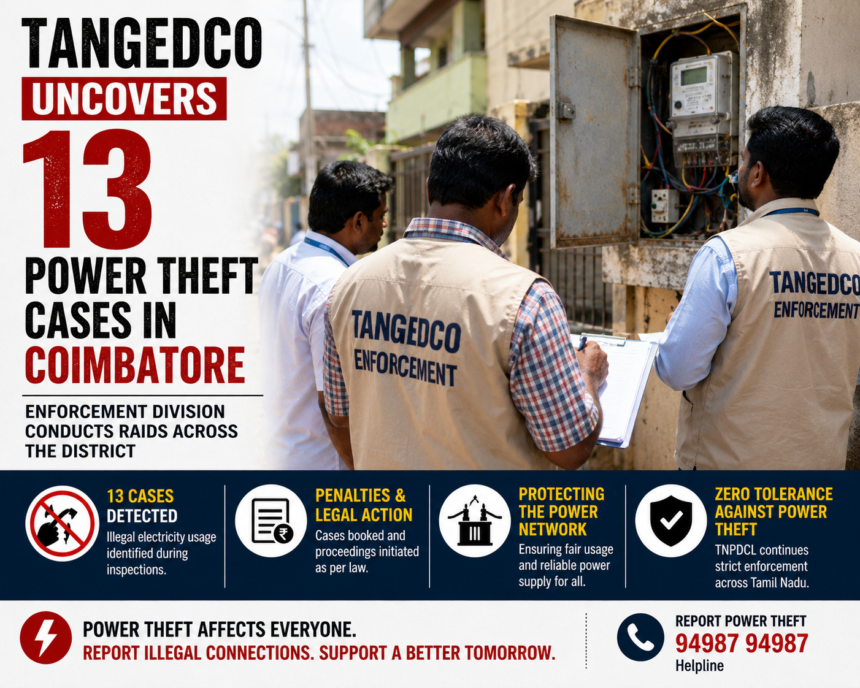
The Tamil Nadu Power Distribution Corporation Limited (TNPDCL) Enforcement Division has detected 13 power theft cases in Coimbatore during a series of inspections. Officials conducted raids across various locations and identified unauthorized electricity usage, leading to assessments, penalties, and legal action as per electricity regulations. The operation reflects TNPDCL’s continued efforts to curb power theft and ensure fair electricity distribution across the region.
13 Power Theft Cases in Coimbatore Detected During TNPDCL Enforcement Raids
Electricity theft continues to pose a significant challenge for power distribution companies, affecting both public infrastructure and honest consumers. In one of the latest Power Theft Cases in Coimbatore, the Tamil Nadu Power Distribution Corporation Limited (TNPDCL) Enforcement Division detected 13 instances of illegal electricity usage during recent inspections carried out across the city.
The raids were conducted as part of the department’s regular enforcement activities aimed at identifying unauthorized power connections, meter tampering, and other violations of electricity regulations. Officials stated that appropriate action, including financial assessments and legal procedures, has been initiated against those involved.
The operation has become one of the important Latest News in Coimbatore, highlighting the state’s continued efforts to reduce electricity theft and improve the efficiency of the power distribution network.
What Happened During the Enforcement Drive?
The TNPDCL Enforcement Division carried out inspections at multiple locations under the Coimbatore distribution network.
During these inspections, officials identified 13 separate cases where electricity was allegedly being used illegally.
The violations reportedly included unauthorized connections and other forms of electricity theft detected through technical inspections and verification procedures.
Following the inspections, officials initiated action in accordance with the Electricity Act and TNPDCL regulations.
Why Power Theft Is a Serious Issue
Electricity theft is more than just unauthorized power usage. It has wider consequences for the entire power distribution system.
Illegal consumption can result in:
Financial losses to the electricity board.
Increased burden on paying consumers.
Overloading of transformers and distribution lines.
Voltage fluctuations.
Reduced quality of electricity supply.
Higher maintenance costs.
Increased risk of electrical accidents.
By identifying and preventing power theft, authorities aim to improve the reliability of electricity supply for legitimate consumers.
How TNPDCL Detects Power Theft
Modern enforcement teams use several methods to identify suspicious electricity usage.
These may include:
- Meter inspections.
- Consumption pattern analysis.
- Surprise field inspections.
- Technical audits.
- Load verification.
- Consumer complaint investigations.
Officials compare electricity consumption data with expected usage patterns to identify irregularities that may require further inspection.
Action Taken Against Violators
According to TNPDCL procedures, cases involving electricity theft may lead to:
- Assessment of financial losses.
- Recovery of charges.
- Penalty payments.
- Disconnection of illegal supply where applicable.
- Legal proceedings under the Electricity Act.
The exact action depends on the nature and severity of the violation identified during inspections.
Why Regular Enforcement Matters
Routine enforcement drives play a crucial role in maintaining the integrity of the electricity distribution system.
Such inspections help:
- Reduce commercial losses.
- Ensure fair billing.
- Improve grid reliability.
- Prevent illegal connections.
- Promote responsible electricity usage.
Officials have indicated that similar inspections will continue across various regions to discourage electricity theft and ensure compliance with regulations.
Impact on Honest Consumers
Power theft affects more than the electricity provider. Consumers who pay their bills on time can also experience indirect consequences.
Illegal electricity usage can contribute to:
- Unstable power supply.
- Frequent transformer failures.
- Unexpected outages.
- Increased operational costs.
By reducing theft, authorities aim to improve service quality and maintain a more reliable electricity network for households, businesses, and industries.
Growing Focus on Electricity Enforcement in Tamil Nadu
Across Tamil Nadu, electricity distribution authorities have strengthened enforcement activities in recent years.
Regular inspections, awareness campaigns, and stricter monitoring systems are part of broader efforts to improve operational efficiency and reduce revenue losses caused by unauthorized electricity usage.
The latest Power Theft Cases in Coimbatore demonstrate the importance of continued vigilance in protecting public infrastructure and ensuring that electricity resources are used responsibly.
Follow for more instant updates about Latest News in Coimbatore
Understanding the Legal Consequences of Power Theft
Electricity theft is a punishable offence under the Electricity Act, 2003. The law empowers electricity distribution companies to inspect premises, detect unauthorized electricity usage, recover financial losses, and initiate legal action against offenders.
Power theft is not limited to illegal wire connections. It also includes practices such as tampering with electricity meters, bypassing meters, manipulating meter readings, or using electricity without proper authorization.
When violations are detected, the distribution company can impose penalties, disconnect the electricity supply, and, in serious cases, pursue criminal proceedings in accordance with the law.
TNPDCL’s Ongoing Efforts to Prevent Power Theft
The Tamil Nadu Power Distribution Corporation Limited (TNPDCL) has been strengthening its enforcement activities across the state to reduce electricity theft and improve the efficiency of the power distribution system.
The department’s enforcement teams regularly conduct:
- Surprise inspections
- Technical audits
- Consumer verification drives
- Meter testing
- Load inspections
- Intelligence-based raids
- Complaint-based investigations
These proactive measures help identify irregularities while promoting transparency and accountability in electricity distribution.
The recent Power Theft Cases in Coimbatore demonstrate TNPDCL’s continued commitment to ensuring that electricity is used legally and responsibly.
Read to know more about the Ministry of Power, Government of India
How Power Theft Affects Everyone
While electricity theft may appear to benefit a few individuals, its impact is felt across the entire community.
Some of the consequences include:
Financial Losses
Electricity boards lose significant revenue due to unauthorized consumption. These losses affect maintenance, infrastructure upgrades, and future investments in the power network.
Poor Quality of Supply
Illegal connections often overload transformers and feeders, resulting in voltage fluctuations, equipment failures, and unexpected power interruptions.
Safety Hazards
Unauthorized electrical wiring increases the risk of electric shocks, short circuits, fires, and accidents that can endanger lives and property.
Higher Operational Costs
Power theft increases operational expenses for the electricity provider, making it more difficult to maintain a reliable and efficient supply system.
For more Civic News in Coimbatore Follow Today’s Coimbatore
Public Awareness Plays a Key Role
Preventing electricity theft is not solely the responsibility of enforcement agencies. Public awareness and community participation are equally important.
Consumers can contribute by:
- Using only authorised electricity connections.
- Reporting suspected power theft to TNPDCL.
- Avoiding unauthorised electrical modifications.
- Ensuring electricity meters remain accessible for inspection.
- Paying electricity bills on time.
Responsible electricity usage supports a stronger and more sustainable power infrastructure.
Technology Strengthening Electricity Monitoring
Modern technology has significantly improved the ability of power utilities to detect irregularities.
TNPDCL increasingly relies on digital systems such as:
- Smart meter technologies
- Data analytics
- Consumption pattern monitoring
- Remote meter reading systems
- GIS-based electricity network mapping
These technologies enable quicker identification of suspicious usage patterns and allow enforcement teams to take timely action.
Building a Reliable Power Network
As Coimbatore continues to expand as a major industrial and residential hub, maintaining a reliable electricity network has become increasingly important.
Industries, educational institutions, healthcare facilities, commercial establishments, and households all depend on uninterrupted power supply.
Reducing electricity theft helps ensure:
- Stable electricity distribution
- Better infrastructure planning
- Improved consumer services
- Reduced technical losses
- Greater operational efficiency
Strong enforcement combined with public cooperation can help create a more resilient and dependable electricity network for the city.
What Happens After a Power Theft Case Is Detected?
Once a suspected case is identified during an inspection, officials follow established procedures that may include:
- Verification of the violation
- Documentation of evidence
- Assessment of electricity consumed illegally
- Calculation of financial penalties
- Recovery proceedings
- Filing of legal cases where required
These procedures are carried out in accordance with applicable electricity regulations.
Read to know more about the Tamil Nadu Power Distribution Corporation Limited
Why This News Matters
The detection of 13 Power Theft Cases in Coimbatore highlights the importance of protecting public infrastructure and ensuring fairness for all electricity consumers.
Regular enforcement drives not only discourage illegal practices but also reinforce public confidence in the electricity distribution system.
For honest consumers who pay their electricity bills regularly, such enforcement contributes to improved service quality and a more reliable power supply.
As Latest News in Coimbatore continues to focus on civic developments, stories like this underline the importance of accountability, public cooperation, and responsible use of essential services.
Frequently Asked Questions (FAQs)
1. How many power theft cases were detected in Coimbatore?
TNPDCL’s Enforcement Division detected 13 power theft cases during recent inspections conducted across Coimbatore.
2. What is considered electricity theft?
Electricity theft includes unauthorized power connections, meter tampering, bypassing meters, illegal electricity usage, and other violations under the Electricity Act.
3. What action can be taken against offenders?
Authorities may impose financial assessments, recover dues, disconnect illegal electricity connections, and initiate legal proceedings where applicable.
4. Why are enforcement raids conducted?
Regular inspections help reduce electricity theft, protect public infrastructure, improve power supply reliability, and ensure fairness among consumers.
5. How can consumers help prevent electricity theft?
Consumers can report suspected illegal connections, use only authorised electricity services, avoid meter tampering, and comply with electricity regulations.
Conclusion
The recent detection of 13 Power Theft Cases in Coimbatore reflects TNPDCL’s continued efforts to protect the integrity of Tamil Nadu’s electricity distribution system. Regular enforcement operations play a crucial role in preventing revenue loss, maintaining reliable electricity services, and ensuring that all consumers are treated fairly.
As Coimbatore continues to grow, responsible electricity usage and public cooperation will remain essential for building a safe, efficient, and sustainable power network. Ongoing inspections and strict enforcement are expected to strengthen compliance while promoting accountability across the region.
For more news like this, visit Today’s Coimbatore News Directory.
Lorem ipsum dolor sit amet, consectetur adipiscing elit. Ut elit tellus, luctus nec ullamcorper mattis, pulvinar dapibus leo.