TL;DR
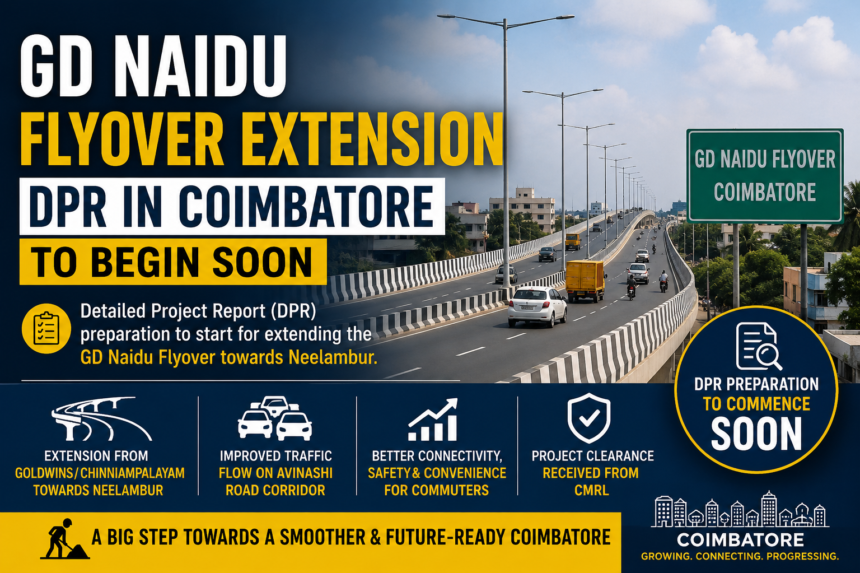
The GD Naidu Flyover Extension DPR in Coimbatore is expected to begin soon, marking the next planning stage for extending the Avinashi Road elevated corridor. Earlier reports said the proposed extension is planned from Goldwins/Chinniampalayam towards Neelambur, and that the State Highways Department received clearance from CMRL for the project movement.
GD Naidu Flyover Extension DPR in Coimbatore to Begin Soon
The GD Naidu Flyover Extension DPR in Coimbatore has become an important update for thousands of daily commuters using Avinashi Road. The proposed extension is expected to improve travel movement on one of the busiest stretches in the city, especially around Goldwins, Chinniampalayam, SITRA, and Neelambur.
Avinashi Road is one of Coimbatore’s key corridors, connecting residential areas, IT parks, educational institutions, hospitals, airport access roads, and industrial zones. Because of this, even small traffic delays on this route can affect office-goers, students, transport vehicles, and airport passengers.
Get more information related news
The existing GD Naidu Flyover has already changed the traffic movement on Avinashi Road. Now, with the GD Naidu Flyover Extension DPR in Coimbatore expected to move forward, the city may see another major infrastructure planning phase.
Why GD Naidu Flyover Extension DPR in Coimbatore Is Important
A DPR, or Detailed Project Report, is one of the most important stages before a large infrastructure project moves ahead. It usually studies the project route, cost, design, land needs, traffic impact, technical feasibility, and execution plan.
The GD Naidu Flyover Extension DPR in Coimbatore is important because it will help authorities understand how the flyover extension can be planned without affecting other major projects and public movement.
The proposed extension is especially relevant because earlier reports mentioned that the project could extend from the Goldwins/Chinniampalayam side to Neelambur along the Avinashi Road corridor.
GD Naidu Flyover and Avinashi Road Connectivity
The GD Naidu Elevated Expressway, also known as the Avinashi Road flyover, is a major elevated corridor in Coimbatore. Publicly available project information describes it as a 10.1-km flyover connecting Uppilipalayam and Goldwins, built to reduce congestion on Avinashi Road.
Avinashi Road handles heavy traffic because it connects:
- Coimbatore city centre
- Peelamedu
- Hope College
- SITRA
- Airport region
- Goldwins
- Chinniampalayam
- Neelambur side
For many people, this road is not just a city road. It is a daily lifeline.
How the Flyover Extension Could Help Commuters
If the extension moves ahead after DPR preparation and approvals, commuters may benefit in several ways.
1. Better Travel Flow Towards Neelambur
The GD Naidu Flyover Extension DPR in Coimbatore could support smoother movement towards Neelambur, which has become a fast-growing area with highway connectivity and expanding commercial activity.
2. Reduced Junction-Level Congestion
Traffic near Goldwins and Chinniampalayam often becomes slow during peak hours. A planned elevated extension can help reduce pressure at key junctions.
3. Improved Airport-Side Movement
Avinashi Road is closely linked to Coimbatore International Airport access. Better corridor planning can support airport passengers, taxis, buses, and logistics vehicles.
4. Stronger East Coimbatore Connectivity
The extension can improve connectivity between central Coimbatore and the city’s eastern growth belt.
Get more information related about the news
CMRL Clearance and Project Movement
Earlier reports stated that Chennai Metro Rail Limited provided necessary clearance to the State Highways Department for the proposed GD Naidu flyover extension. This was described as an important step because metro-related planning and road infrastructure must be coordinated carefully.
This matters because Coimbatore has also been discussing future mass transport and metro-related possibilities. For any major elevated road project, alignment coordination is necessary to avoid future design conflicts.
The GD Naidu Flyover Extension DPR in Coimbatore will likely focus on these technical aspects in detail before the next stage.
What DPR Preparation May Include
The Detailed Project Report may examine several key points:
Route Alignment
Authorities may study the exact path of the extension and how it connects with the existing flyover.
Traffic Volume Study
Traffic movement during peak and non-peak hours may be studied to understand current and future demand.
Land and Utility Mapping
Roadside utilities, service roads, drains, power lines, and possible land requirements may be reviewed.
Safety Design
Flyover ramps, merging points, lighting, signage, speed control, and emergency access are important safety factors.
Cost Estimation
The DPR may estimate the total project cost, construction method, material needs, and timeline.
Coordination With Other Agencies
The project may require coordination with highways, traffic police, local body authorities, metro planning teams, and airport-related agencies where needed.
GD Naidu Flyover Extension DPR in Coimbatore and Traffic Safety
Traffic safety will be a major part of public discussion around the flyover. After the GD Naidu flyover opened, authorities also focused on monitoring violations and accident prevention. Reports earlier mentioned AI-based surveillance camera installation on the flyover to detect violations and support enforcement.
So, while the GD Naidu Flyover Extension DPR in Coimbatore focuses on expansion, safety planning should also remain a priority. Flyovers can improve travel speed, but they also need strong traffic discipline.
Important safety requirements include:
- Clear lane markings
- Speed control boards
- CCTV or AI monitoring
- Proper lighting
- Safe entry and exit ramps
- Emergency response access
- Strict action against wrong-side driving and racing
Why Avinashi Road Needs Long-Term Infrastructure Planning
Avinashi Road is one of the most commercially active routes in Coimbatore. The road connects important areas and also acts as a gateway for people travelling towards Tiruppur, Erode, Salem, and beyond.
As Coimbatore grows, this road will continue to face rising traffic demand. The GD Naidu Flyover Extension DPR in Coimbatore is therefore not just about one flyover. It is part of a larger conversation about the city’s future mobility.
For more news about to follow todays coimbatore
Good infrastructure planning should balance:
- Faster movement
- Public transport needs
- Pedestrian safety
- Local business access
- Service road usability
- Emergency vehicle movement
- Future metro or mass transit planning
Benefits for Businesses and Residents
The proposed flyover extension can also support local business activity. Smooth connectivity helps employees, customers, delivery vehicles, and service providers move faster.
Areas along Avinashi Road have many:
- IT companies
- Colleges
- Hospitals
- Hotels
- Shops
- Residential apartments
- Industrial and commercial establishments
A better road network can reduce travel stress and improve productivity for the public.
Public Expectations From the Project
People in Coimbatore generally expect infrastructure projects to be planned with clear communication. For the GD Naidu Flyover Extension DPR in Coimbatore, residents may expect updates on:
- Project route
- DPR completion timeline
- Construction schedule
- Traffic diversion plans
- Environmental impact
- Safety measures
- Service road access
- Estimated project cost
Transparent updates can help avoid confusion and make public cooperation easier during future construction.
Possible Challenges in the Flyover Extension
Like any major city infrastructure project, this extension may also face challenges.
Traffic Diversions During Construction
Construction on a busy corridor like Avinashi Road must be carefully managed to reduce inconvenience.
Coordination With Multiple Agencies
Highways, metro planning, local bodies, traffic police, and utility departments may need to work together.
Utility Shifting
Power lines, drainage networks, water pipelines, and telecom cables may require detailed planning.
Local Access Management
Service roads and business access should be maintained wherever possible.
Get more information about the news
Coimbatore’s Infrastructure Growth Story
Coimbatore has seen several major infrastructure updates in recent years, including flyovers, road improvements, smart city works, lakefront development, and traffic management projects.
The GD Naidu Flyover Extension DPR in Coimbatore adds to this development journey. The city is expanding rapidly, and infrastructure must keep pace with population growth, business activity, and regional connectivity.
For update to follow todays coimbatore
What Happens After DPR Preparation?
After DPR preparation, the project may move through several stages depending on approvals and funding.
Typical next steps include:
- DPR submission
- Technical review
- Cost approval
- Administrative sanction
- Tender process
- Contractor finalisation
- Construction planning
- Traffic diversion notification
- Project execution
Each stage can take time, especially for large urban infrastructure projects.
Why This News Matters to Daily Commuters
For the public, the GD Naidu Flyover Extension DPR in Coimbatore matters because it directly connects with everyday travel. People who travel for work, college, hospital visits, airport trips, and business meetings may benefit from improved movement once the project is completed in the future.
At the same time, residents will also want authorities to ensure that the project is designed safely and implemented with minimum inconvenience.
Conclusion
The GD Naidu Flyover Extension DPR in Coimbatore is a key infrastructure update for the city’s Avinashi Road corridor. With DPR preparation expected to begin soon, the project has entered an important planning phase that could shape the future of travel towards Goldwins, Chinniampalayam, and Neelambur.
If planned and executed well, the extension can improve traffic flow, support airport-side connectivity, reduce congestion, and strengthen Coimbatore’s growing urban infrastructure.