TL;DR
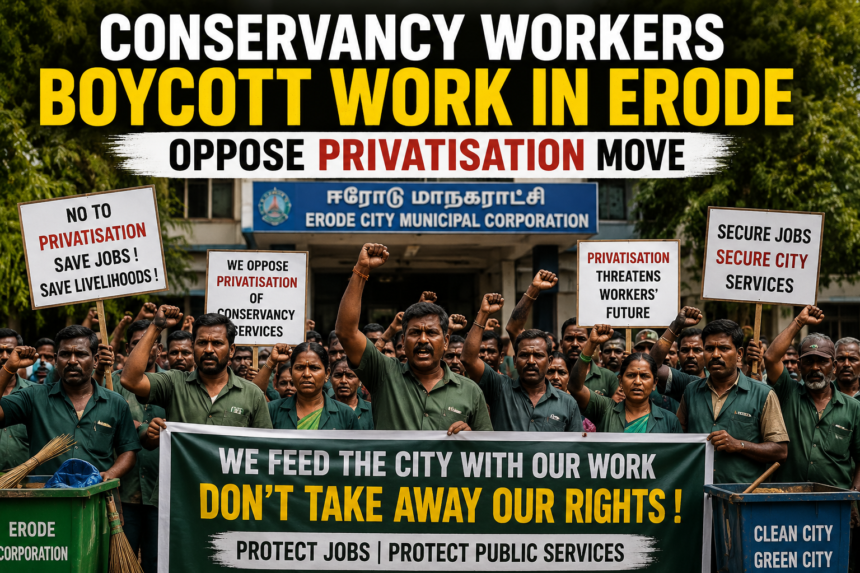
Conservancy Workers Boycott Work in Erode as sanitation workers opposed the Erode Corporation’s reported move towards privatisation of conservancy operations. The workers expressed concerns about job security, employee welfare, and the future of public sanitation services. The protest highlighted the growing debate around privatisation of municipal services and its potential impact on workers and urban governance.
Conservancy Workers Boycott Work in Erode Over Privatisation Concerns
Conservancy Workers Boycott Work in Erode after workers employed in sanitation and waste management services staged a protest against the Corporation’s reported privatisation initiative. The protest brought civic services into focus and sparked discussions about employment security, worker rights, and the future of municipal sanitation management.
Sanitation workers play a crucial role in maintaining public hygiene and waste collection systems. Any disruption to these services can directly impact residents and urban cleanliness.
The protest has attracted attention from labour organisations, civic activists, and residents who are closely monitoring developments.
Follow for more news Latest Tamil Nadu News
Why Are Conservancy Workers Opposing Privatisation?
The primary concern raised by workers revolves around employment stability.
Workers fear that privatisation could lead to:
- Reduced job security
- Changes in employment conditions
- Contract-based appointments
- Reduced employee benefits
- Uncertainty regarding long-term welfare
Many workers believe that municipal sanitation services should remain under direct public administration to ensure accountability and workforce protection.
As a result, Conservancy Workers Boycott Work in Erode has become a major civic issue attracting public attention.
Importance of Conservancy Workers in Urban Governance
Sanitation workers form the backbone of municipal public health systems.
Their responsibilities include:
Waste Collection
Daily door-to-door garbage collection.
Street Cleaning
Maintaining cleanliness in public spaces.
Drain Maintenance
Preventing blockages and water stagnation.
Public Hygiene Support
Helping municipalities maintain sanitation standards.
Without effective conservancy services, urban centres may face serious cleanliness and public health challenges.
Impact of the Boycott on Civic Services
When Conservancy Workers Boycott Work in Erode, immediate concerns arise regarding waste accumulation and sanitation management.
Potential impacts include:
- Delayed garbage collection
- Overflowing waste bins
- Public inconvenience
- Health concerns during prolonged disruptions
- Increased operational challenges for civic authorities
Municipal bodies often seek quick resolutions to minimise inconvenience to residents.
Swachh Bharat Mission Official Website
The Debate Around Privatisation of Municipal Services
Privatisation of public services remains a widely debated topic across India.
Supporters argue that privatisation can:
Improve Operational Efficiency
Private firms may bring modern technologies and management practices.
Reduce Administrative Burden
Local bodies can focus on oversight and governance.
Improve Resource Allocation
Specialised agencies may handle services more efficiently.
However, critics raise concerns regarding:
- Worker welfare
- Employment security
- Service affordability
- Accountability mechanisms
The ongoing situation in Erode reflects this broader national discussion.
Labour Rights and Worker Welfare Concerns
Labour unions frequently advocate for protections when public services undergo structural changes.
Key concerns include:
Job Continuity
Ensuring existing employees retain employment.
Fair Compensation
Maintaining salary structures and benefits.
Social Security
Protecting pension and welfare schemes.
Workplace Safety
Ensuring adequate working conditions.
The protest by sanitation workers highlights the importance of balancing administrative reforms with employee welfare.
Role of Local Governments in Public Sanitation
Urban local bodies are responsible for maintaining clean and healthy cities.
Their duties include:
- Waste collection
- Disposal management
- Sanitation infrastructure
- Public hygiene programs
- Environmental protection
Any major change in service delivery systems requires careful planning and stakeholder consultation.
The issue surrounding Conservancy Workers Boycott Work in Erode demonstrates how sanitation management remains a critical component of urban governance.
Public Health Implications of Sanitation Service Disruptions
Cleanliness and sanitation directly influence public health.
Poor waste management can contribute to:
- Environmental pollution
- Pest infestations
- Water contamination
- Increased disease risks
This is why uninterrupted conservancy services are essential for growing urban centres.
Experts often emphasize that sustainable sanitation systems require both operational efficiency and workforce stability.
Finding a Balanced Solution
Resolving disputes between workers and authorities often requires constructive dialogue.
Possible approaches include:
Stakeholder Consultations
Engaging workers in decision-making processes.
Employment Guarantees
Providing assurances regarding job continuity.
Transparent Policy Communication
Clearly explaining proposed changes.
Worker Welfare Measures
Addressing concerns related to benefits and safety.
Such measures can help build trust and facilitate smoother transitions if reforms are implemented.
Read to know more about the Ministry of Housing and Urban Affairs
Broader Lessons for Urban Administration
The events in Erode offer valuable lessons for municipalities across India.
Successful civic administration requires balancing:
- Service efficiency
- Financial sustainability
- Worker welfare
- Public accountability
- Citizen satisfaction
Any policy change affecting essential public services must consider both operational goals and human impact.
What Happens Next?
The future course of action will likely depend on discussions between workers, labour representatives, and municipal authorities.
Observers expect:
- Further negotiations
- Administrative reviews
- Stakeholder consultations
- Policy clarifications
Residents and civic groups will continue to monitor developments closely due to the importance of sanitation services.
Follow for more Civic Development News
Final Thoughts
The issue surrounding Conservancy Workers Boycott Work in Erode highlights the complex relationship between public service reforms and workforce concerns. While municipal authorities often seek ways to improve efficiency, workers emphasize the importance of job security, welfare, and fair treatment.
As discussions continue, the focus will remain on finding solutions that protect both public sanitation services and the livelihoods of those who help keep cities clean every day.
The outcome of this situation could serve as an important example for other municipalities considering similar reforms in the future.
For More news like this, visit Todays Coimbatore News Directory