TL;DR
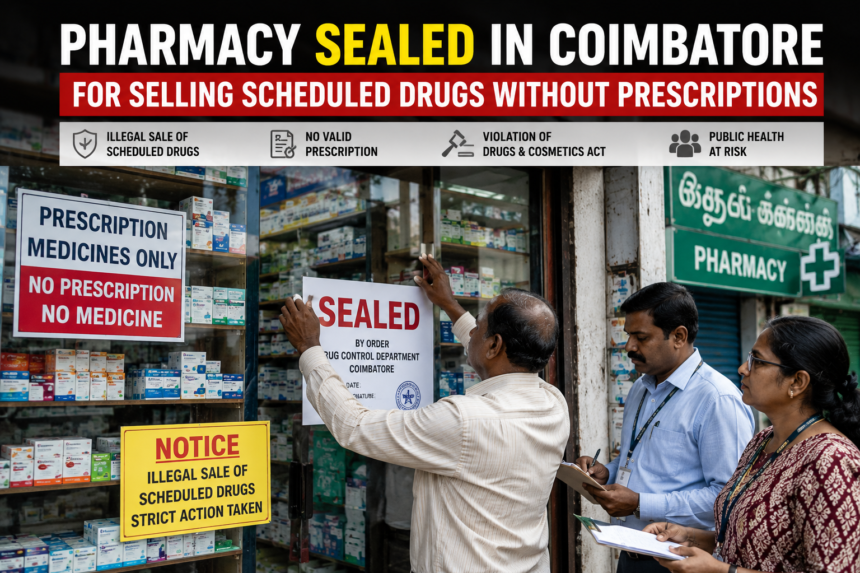
A pharmacy in Coimbatore has been sealed by the Drug Control Department after officials allegedly found it selling scheduled medicines without valid prescriptions during an inspection. The action was taken under applicable drug regulations to ensure compliance with pharmaceutical laws and protect public health. Authorities have reiterated the importance of dispensing prescription medicines only with authorised medical prescriptions.
Coimbatore Pharmacy Sealed During Drug Control Inspection
In a significant enforcement action aimed at safeguarding public health, Drug Control Department officials sealed a pharmacy in Coimbatore after it was allegedly found selling scheduled drugs without valid medical prescriptions.
The action followed an inspection conducted by drug enforcement authorities as part of ongoing efforts to monitor compliance with pharmaceutical regulations. Officials reportedly identified irregularities involving the sale of medicines that legally require a doctor’s prescription before being dispensed.
The inspection highlights the government’s continued focus on preventing the misuse of prescription medicines and ensuring that pharmacies operate in accordance with the law.
Follow for more instant updates in Coimbatore
What Are Scheduled Drugs?
Scheduled drugs are medicines that are regulated under India’s Drugs and Cosmetics Act and Rules because of their potential health risks if used without proper medical supervision.
These medicines generally include drugs that:
- Require a registered medical practitioner’s prescription.
- Must be dispensed only by licensed pharmacies.
- Need proper maintenance of sales records.
- Should not be sold over the counter without authorisation.
- Require careful storage and handling.
These regulations are intended to prevent misuse, self-medication, drug dependency, and inappropriate use of medicines.
Why Prescription Rules Are Important
Medical prescriptions ensure that medicines are used safely and appropriately.
Selling scheduled drugs only with a valid prescription helps:
- Prevent misuse of medicines.
- Reduce self-medication risks.
- Protect patients from harmful side effects.
- Avoid antibiotic resistance caused by improper drug use.
- Ensure correct dosage and treatment.
- Maintain accountability in pharmaceutical practice.
Health experts consistently advise patients to consult qualified medical professionals before using prescription medicines.
Follow for more instant Latest Health & Public Safety News from Coimbatore
Drug Control Department Continues Regular Inspections
The Drug Control Department conducts inspections across pharmacies to verify compliance with licensing conditions and pharmaceutical regulations.
During such inspections, officials typically examine:
- Prescription records.
- Drug storage conditions.
- Licence validity.
- Sales registers.
- Inventory management.
- Compliance with drug dispensing rules.
Regular monitoring helps strengthen public confidence in healthcare services while ensuring that medicines are dispensed responsibly.
Public Health Remains the Priority
Authorities have repeatedly emphasised that enforcing pharmaceutical regulations is essential to protecting public health.
Strict compliance helps:
- Improve patient safety.
- Reduce illegal sale of medicines.
- Strengthen responsible pharmacy practices.
- Prevent misuse of controlled drugs.
- Support ethical healthcare delivery.
- Ensure legal compliance by medical retailers.
The latest enforcement action serves as a reminder that pharmacies are expected to adhere to established legal and professional standards.
Importance of Responsible Medicine Use
Healthcare professionals encourage the public to:
- Purchase medicines only from licensed pharmacies.
- Always consult a qualified doctor before taking prescription medicines.
- Avoid self-medication.
- Follow prescribed dosages.
- Keep medicines away from children.
- Report suspected illegal drug sales to the authorities.
Responsible medicine use protects both individual health and the wider community.
Follow for more instant Latest Health & Public Safety News from Coimbatore
Legal Framework for the Sale of Scheduled Medicines in India
The sale and distribution of scheduled medicines in India are regulated under the Drugs and Cosmetics Act, 1940 and the Drugs and Cosmetics Rules, 1945. These laws are designed to ensure that prescription medicines are dispensed safely and only under the supervision of qualified medical practitioners.
Certain categories of medicines, including those listed under Schedule H, Schedule H1, and Schedule X, require a valid prescription before they can be sold. Pharmacies are also required to maintain records for specified medicines and comply with licensing conditions laid down by the Drug Control Department.
Failure to comply with these regulations may result in enforcement actions, including inspections, suspension or cancellation of licences, sealing of premises, and other legal proceedings as provided under the law.
Read to know more about the Ministry of Health and Family Welfare
Why Strict Monitoring of Prescription Medicines Matters
Prescription medicines are intended to treat specific medical conditions under professional supervision. Unregulated access to these medicines can pose serious health risks.
Strict monitoring helps to:
- Prevent self-medication.
- Reduce the misuse of antibiotics and controlled medicines.
- Minimise the risk of drug dependency.
- Protect patients from adverse drug reactions.
- Encourage responsible prescribing and dispensing practices.
- Strengthen public confidence in the healthcare system.
Health authorities regularly remind the public that medicines should only be taken as advised by qualified healthcare professionals.
Role of Licensed Pharmacies
Licensed pharmacies are an important part of the healthcare system. Beyond dispensing medicines, they play a key role in promoting safe and responsible medication practices.
A compliant pharmacy is expected to:
- Verify every prescription before dispensing scheduled medicines.
- Maintain accurate records where required.
- Store medicines under appropriate conditions.
- Ensure that only authorised personnel dispense prescription drugs.
- Follow all applicable regulations issued by the Drug Control Department.
These practices help safeguard patient safety and maintain professional standards in pharmaceutical care.
Follow for more instant updates in Coimbatore
Public Awareness Can Improve Medicine Safety
Authorities and healthcare professionals encourage the public to play an active role in promoting safe medicine use.
Citizens can contribute by:
- Purchasing medicines only from licensed pharmacies.
- Consulting registered medical practitioners before taking prescription drugs.
- Avoiding requests for prescription medicines without medical advice.
- Following the prescribed dosage and treatment duration.
- Reporting suspected illegal sale of medicines to the relevant authorities.
Responsible medicine use benefits both individual patients and the wider community.
Strengthening Public Health Through Regulatory Enforcement
Regular inspections by the Drug Control Department are part of broader efforts to ensure compliance with pharmaceutical regulations across Tamil Nadu.
Such enforcement measures aim to:
- Protect consumers from unsafe practices.
- Improve accountability within the pharmaceutical sector.
- Prevent illegal sale of prescription medicines.
- Promote ethical healthcare delivery.
- Ensure compliance with national drug regulations.
These actions reinforce the importance of maintaining high standards in the distribution of medicines.
Read to know more about the Central Drugs Standard Control Organisation (CDSCO
Frequently Asked Questions (FAQs)
1. Why was the pharmacy sealed in Coimbatore?
According to the reported inspection, the pharmacy was sealed after officials alleged that scheduled medicines were being sold without valid medical prescriptions.
2. What are scheduled medicines?
Scheduled medicines are prescription drugs that can legally be dispensed only under specific regulatory conditions, usually with a valid prescription from a registered medical practitioner.
3. Why is a prescription required for these medicines?
A prescription helps ensure that medicines are used appropriately, safely, and under medical supervision, reducing the risk of misuse and adverse health effects.
4. Which department conducts such inspections?
The Drug Control Department carries out inspections to verify compliance with pharmaceutical regulations and licensing requirements.
5. How can the public purchase medicines safely?
People are advised to buy medicines only from licensed pharmacies, consult qualified doctors before taking prescription medicines, and follow the prescribed dosage and treatment instructions.
Conclusion
The action taken against the pharmacy in Coimbatore highlights the importance of adhering to pharmaceutical regulations that are designed to protect public health. Dispensing scheduled medicines only with valid prescriptions is a key safeguard against misuse, inappropriate treatment, and potential health risks.
Regular inspections by the Drug Control Department help strengthen accountability within the healthcare system while encouraging responsible pharmacy practices. At the same time, public awareness about the safe use of medicines remains equally important in ensuring that prescription drugs are used correctly and responsibly.
As healthcare regulations continue to evolve, cooperation between authorities, healthcare professionals, pharmacists, and the public will remain essential for maintaining a safe and trustworthy pharmaceutical ecosystem.
Today’s Coimbatore will continue to provide verified updates on public health, healthcare regulations, civic affairs, and important developments across the Coimbatore region.
Lorem ipsum dolor sit amet, consectetur adipiscing elit. Ut elit tellus, luctus nec ullamcorper mattis, pulvinar dapibus leo.