TL;DR
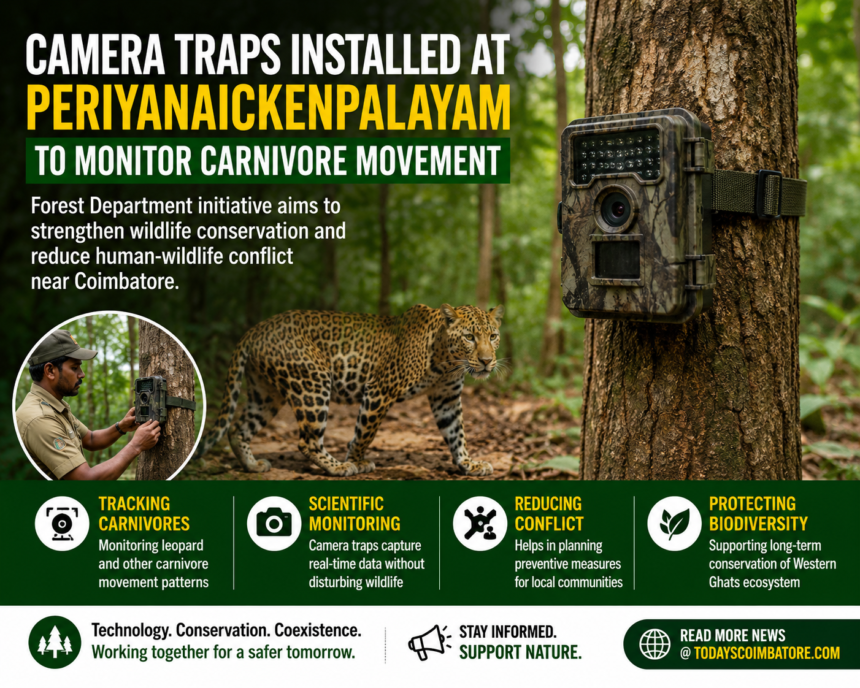
The Tamil Nadu Forest Department has installed camera traps at Periyanaickenpalayam near Coimbatore to monitor carnivore movement in forest fringe areas. The initiative aims to better understand wildlife movement patterns, strengthen conservation efforts, and help reduce potential human-wildlife conflict. Officials believe the collected data will support scientific wildlife management and improve safety for both animals and nearby communities.
Camera Traps at Periyanaickenpalayam Strengthen Wildlife Monitoring Near Coimbatore
The Tamil Nadu Forest Department has intensified wildlife monitoring efforts by installing Camera Traps at Periyanaickenpalayam, a forest-fringe region near Coimbatore known for occasional carnivore movement.
The initiative is part of the department’s ongoing efforts to study the movement of wild animals, improve conservation strategies, and minimise human-wildlife conflict in areas located close to forest boundaries.
Camera traps are widely used across India’s protected forests because they allow officials to observe wildlife without disturbing their natural behaviour. By capturing photographs and videos whenever an animal passes by, these devices provide valuable information about species presence, activity patterns, and habitat use.
The latest initiative has become one of the important Latest News in Coimbatore, highlighting the city’s continued focus on environmental conservation and scientific wildlife management.
Why Were Camera Traps Installed?
Forest officials use camera traps to monitor areas where wildlife activity has been reported or where animal movement is expected.
The cameras help authorities:
- Track carnivore movement.
- Identify species using the forest corridor.
- Understand movement timings.
- Monitor habitat utilisation.
- Improve wildlife conservation planning.
- Reduce human-wildlife conflict.
Unlike direct observation, camera traps operate continuously and record wildlife activity throughout the day and night without disturbing the animals.
Understanding Carnivore Movement
Carnivores such as leopards and other wild predators naturally move across forest landscapes in search of food, water, shelter, and breeding territories.
During seasonal changes or habitat disturbances, these animals may travel through forest edges and nearby settlements.
Monitoring these movement patterns allows forest officials to better predict wildlife activity and implement preventive measures where necessary.
Scientific monitoring also helps authorities distinguish between occasional animal movement and areas that require additional conservation attention.
How Camera Traps Work
Camera traps are motion-sensitive devices equipped with infrared sensors.
Whenever an animal passes in front of the camera, it automatically captures high-quality photographs or videos without requiring human presence.
The technology offers several advantages:
- Non-invasive monitoring.
- 24-hour surveillance.
- Accurate wildlife documentation.
- Behavioural observations.
- Population estimation.
- Species identification.
Because the cameras operate silently, they record natural animal behaviour without causing stress or disturbance.
Supporting Wildlife Conservation
Modern wildlife conservation increasingly relies on scientific data rather than assumptions.
Information collected from camera traps helps officials:
- Identify wildlife corridors.
- Protect sensitive habitats.
- Improve forest management.
- Monitor endangered species.
- Detect changes in biodiversity.
This evidence-based approach strengthens conservation planning while ensuring that management decisions are supported by reliable field observations.
Read to know more about the National Tiger Conservation Authority (NTCA)
Reducing Human-Wildlife Conflict
Forest-fringe villages occasionally experience wildlife movement as animals travel through natural corridors.
By understanding where and when carnivores move, officials can:
- Alert nearby communities.
- Increase patrolling.
- Install warning signs.
- Protect both wildlife and residents.
- Develop long-term mitigation strategies.
The goal is not to restrict wildlife but to ensure peaceful coexistence between humans and animals.
Periyanaickenpalayam’s Ecological Importance
Periyanaickenpalayam lies close to forested landscapes that form part of the Western Ghats ecosystem, one of the world’s biodiversity hotspots.
These forests support a wide range of wildlife, including mammals, reptiles, birds, and countless plant species.
Protecting wildlife movement within these landscapes is essential for maintaining ecological balance and preserving biodiversity.
Read to know more about the Tamil Nadu Forest Department
Technology Enhancing Forest Protection
The use of camera traps reflects how technology is transforming wildlife conservation.
Combined with field surveys, GPS mapping, and scientific research, camera trap data provides valuable insights that were previously difficult to obtain.
This allows forest departments to respond more effectively to conservation challenges while reducing unnecessary human intervention.
To follow for more updates Environment News in Coimbatore
Scientific Monitoring Improves Wildlife Conservation
The installation of Camera Traps at Periyanaickenpalayam is part of a broader effort to use science and technology in wildlife conservation. Instead of relying only on direct sightings or public reports, camera traps provide accurate, time-stamped evidence of animal movement in forest areas.
This information helps forest officials understand how wildlife uses different habitats throughout the year. It also allows them to identify important movement corridors that animals depend on while travelling between forest patches.
Such scientific monitoring has become an essential tool in protecting biodiversity across Tamil Nadu and the Western Ghats.
Supporting Peaceful Human-Wildlife Coexistence
As urban development expands closer to forest boundaries, encounters between humans and wildlife can occasionally occur.
Rather than viewing wildlife movement as a threat, forest officials aim to understand these patterns so that preventive measures can be taken before conflicts arise.
The information gathered through Camera Traps at Periyanaickenpalayam will help authorities:
- Monitor animal activity near human settlements.
- Identify frequently used wildlife corridors.
- Increase patrols in sensitive areas.
- Improve public awareness.
- Develop long-term conservation strategies.
The objective is to ensure the safety of both local communities and wildlife while preserving the natural ecosystem.
Why Camera Traps Are an Effective Conservation Tool
Camera traps have become one of the most trusted technologies used by wildlife researchers around the world.
They offer several important advantages:
Non-Invasive Monitoring
Animals are photographed without human presence, allowing them to behave naturally in their habitat.
24-Hour Observation
The cameras operate continuously during both day and night, recording wildlife activity around the clock.
Accurate Wildlife Records
Every image provides valuable information about the species present, the time of movement, and habitat usage.
Long-Term Research
Data collected over weeks and months helps researchers identify seasonal movement patterns, breeding behaviour, and changes in wildlife populations.
Importance of the Western Ghats Ecosystem
Periyanaickenpalayam is located near the foothills of the Western Ghats, a UNESCO World Heritage Site recognised as one of the world’s richest biodiversity hotspots.
The forests surrounding Coimbatore provide habitat for numerous species, including:
- Leopards
- Sloth bears
- Wild boars
- Deer
- Indian gaur
- Small carnivores
- Reptiles
- Hundreds of bird species
Protecting wildlife movement within this landscape is essential for maintaining ecological balance.
Healthy forests also contribute to water conservation, climate regulation, and biodiversity protection, benefiting both wildlife and people.
Role of Local Communities in Conservation
Wildlife conservation is most successful when local communities actively participate.
Residents living near forest areas can contribute by:
- Reporting wildlife sightings responsibly.
- Avoiding activities that disturb forest habitats.
- Following safety advisories issued by forest officials.
- Refraining from feeding or approaching wild animals.
- Supporting conservation awareness programmes.
Public cooperation helps authorities respond more effectively to wildlife movement while reducing unnecessary panic and misinformation.
Technology Strengthening Forest Protection
Modern conservation increasingly relies on technology to improve wildlife management.
Along with camera traps, forest departments use:
- GPS-based mapping
- Drone-assisted monitoring
- Geographic Information Systems (GIS)
- Wildlife tracking databases
- Habitat assessment surveys
These tools provide a clearer understanding of ecosystem health and support informed decision-making.
The use of Camera Traps at Periyanaickenpalayam reflects Tamil Nadu’s continued investment in scientific conservation practices.
Read to know more about the Wildlife Institute of India (WII)
Why This News Matters
The installation of camera traps is not simply a routine field activity. It represents a proactive approach to wildlife conservation that balances environmental protection with public safety.
By understanding carnivore movement, the Forest Department can better protect wildlife while reducing the likelihood of human-animal conflicts in forest-fringe areas.
For residents of Coimbatore, this initiative demonstrates the importance of preserving natural ecosystems that continue to support rich biodiversity despite increasing urban development.
As Latest News in Coimbatore continues to highlight environmental initiatives, stories like this encourage greater awareness of the role every citizen can play in conserving nature.
Frequently Asked Questions (FAQs)
1. Why were camera traps installed at Periyanaickenpalayam?
The Tamil Nadu Forest Department installed camera traps to monitor carnivore movement, study wildlife activity, and support conservation efforts in forest-fringe areas near Coimbatore.
2. How do camera traps work?
Camera traps are motion-sensitive devices equipped with infrared sensors. They automatically capture photographs or videos whenever an animal passes in front of the camera.
3. What is the purpose of monitoring carnivore movement?
Monitoring helps forest officials understand wildlife movement patterns, identify important corridors, reduce human-wildlife conflict, and improve conservation planning.
4. Which animals may be recorded by these cameras?
Depending on wildlife activity in the area, camera traps may capture images of leopards, sloth bears, wild boars, deer, Indian gaur, and other mammals that inhabit the surrounding forests.
5. How can residents support wildlife conservation?
People can help by respecting forest boundaries, reporting wildlife sightings responsibly, avoiding disturbance to natural habitats, and following safety guidelines issued by the Forest Department.
Conclusion
The installation of Camera Traps at Periyanaickenpalayam marks another important step in strengthening wildlife conservation near Coimbatore. By combining modern technology with field-based research, the Tamil Nadu Forest Department is working to better understand carnivore movement while promoting peaceful coexistence between people and wildlife.
As urban development continues to expand, protecting natural habitats and monitoring wildlife corridors become increasingly important. Initiatives like this not only safeguard biodiversity but also contribute to a safer and more sustainable future for communities living near forest landscapes.
The success of such conservation efforts ultimately depends on continued scientific monitoring, responsible public participation, and a shared commitment to preserving the unique ecosystems of the Western Ghats.
For more news like this, visit Today’s Coimbatore News Directory.
Lorem ipsum dolor sit amet, consectetur adipiscing elit. Ut elit tellus, luctus nec ullamcorper mattis, pulvinar dapibus leo.