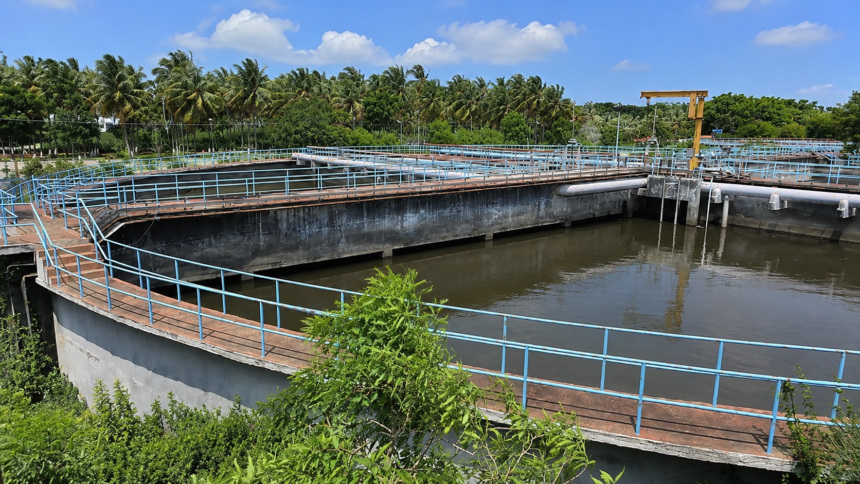
The Water Resources Department has completed a ₹5.5-crore project. It pumps treated sewage from Coimbatore Corporation’s sewage treatment plant at Ondipudur to Kadukuttai tank, roughly 4.6 km away, instead of discharging it into the Noyyal river. The redirected water supports irrigation for nearby drought-prone farmland while reducing one discharge point into the Noyyal.
The Water Resources Department has completed a ₹5.5-crore project to pump treated sewage from Coimbatore Corporation’s sewage treatment plant at Ondipudur to Kadukuttai tank, roughly 4.6 km away. Until now, this treated water flowed directly into the Noyyal river. The new pipeline changes that, redirecting the flow into the tank instead.
Why the Water Resources Department made this change
Discharging treated sewage straight into a river is common practice across Indian cities. But it isn’t the most useful option when better alternatives exist nearby. The Noyyal has long carried pollution concerns from multiple sources, and every discharge point adds to that load, even when the water has already been treated. Kadukuttai tank, on the other hand, can put that same water to direct use, supporting irrigation for farmland in the surrounding drought-prone areas instead of simply flowing past them.
This isn’t the tank’s first connection to Ondipudur’s treated sewage. The Water Resources Department originally developed Kadukuttai tank to receive treated water from the same STP through an earlier pipeline project. That project aimed to support irrigation across roughly 10,000 acres of nearby farmland. This new ₹5.5-crore project builds on that foundation, reinforcing the link between the treatment plant and the tank.
What the project involved
The Water Resources Department laid a pipeline connecting the Ondipudur STP to Kadukuttai tank, covering a distance of about 4.6 km. Treated sewage previously flowed into the Noyyal. Now, this pipeline carries it into the tank instead. The tank stores the water for later use, primarily irrigation, rather than letting it pass into the river system unused.
What This Kadukuttai Tank Treated Sewage Project Means for the Noyyal and Local Farmers
For the Noyyal, this project reduces one discharge point that previously added to the river’s overall flow. Fewer such points generally support better long-term river health, even when the water reaching the river has already been treated. For farmers around Kadukuttai, the redirected supply strengthens an existing irrigation source that has supported agriculture in the area’s drought-prone pockets, giving them steadier access to water that would otherwise have gone unused downstream.
What’s still unclear
- Whether the treated water is being monitored for quality before it enters the tank
- Any plans to extend similar pipeline diversions from other STPs around Coimbatore
- The current utilisation rate of Kadukuttai tank’s capacity following this project’s completion
Todays Coimbatore will update this article if the Water Resources Department releases further details.
Frequently Asked Questions
Where does treated sewage from Ondipudur STP go now?
It now flows through a new pipeline to Kadukuttai tank, about 4.6 km away, instead of being discharged directly into the Noyyal river.
How much did this project cost?
The Water Resources Department completed the project at a cost of ₹5.5 crore.
Why was the treated sewage redirected away from the Noyyal?
Redirecting the water reduces the discharge load on the Noyyal river and instead puts the treated water to direct use for irrigation via Kadukuttai tank.
Who benefits from this project?
Farmers in the drought-prone areas around Kadukuttai tank benefit from a steadier irrigation water supply, while the Noyyal river sees one fewer discharge point.
Is this the first time Kadukuttai tank has received treated sewage from Ondipudur STP?
No. Kadukuttai tank was originally connected to the Ondipudur STP through an earlier pipeline project supporting irrigation in the surrounding area. This new project reinforces that existing link.
Conclusion
This project reflects a small but meaningful shift in how Coimbatore handles its treated wastewater: instead of letting it flow unused into the Noyyal, the city is routing more of it toward productive use. For a river system already under pressure from multiple discharge points, even one redirected pipeline makes a measurable difference. For farmers near Kadukuttai, it strengthens a water source they already depend on. Todays Coimbatore will continue following how this Kadukuttai tank treated sewage diversion affects both river health and irrigation access in the months ahead.