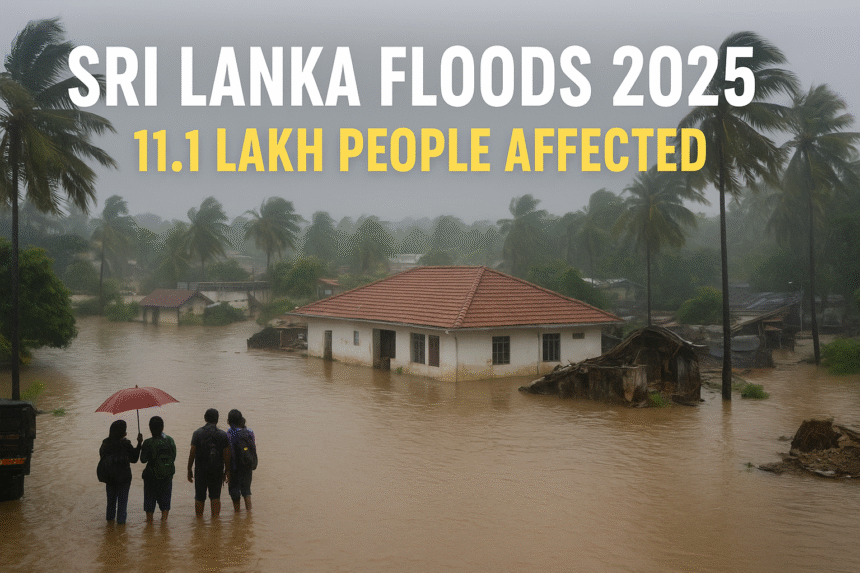
Sri Lanka Hit by Severe Floods: Over 11.1 Lakh People Affected as Heavy Rains Intensify
TL;DR
Sri Lanka is experiencing one of its worst flooding events in recent years. Continuous heavy rainfall has affected more than 11.1 lakh people, damaged homes, displaced families, and triggered rescue operations across multiple districts. Authorities are on high alert as the situation continues to escalate.
W
Sri Lanka is battling a severe weather crisis as continuous heavy rainfall has resulted in widespread flooding across the island nation. According to early disaster management reports, more than 11.1 lakh people have been affected, with over 366+ villages facing partial or complete damage. From submerged towns to disrupted transport routes and emergency evacuations, the country is facing one of the most challenging monsoon periods in recent years.
The intensity of the rainfall has surprised even senior meteorologists. They noted that the current weather pattern is unusually strong, fueled by active monsoon winds and low-pressure formations in the surrounding ocean region. These conditions are expected to remain unstable for several more days, prompting authorities to maintain maximum alert across flood-prone zones.
The impact of the floods stretches far beyond property damage. Families have been forced to abandon their homes, while many communities remain isolated due to washed-away roads and overflowing rivers. Rescue teams, including the Sri Lankan military, local volunteers, and emergency units, are conducting nonstop operations to relocate vulnerable residents to safer locations.
A Country Under Water: How the Flooding Escalated
Rainfall began intensifying earlier this week, but within 48 hours, several districts reported dangerously rising water levels. Areas such as Colombo, Gampaha, Kalutara, Kandy, Nuwara Eliya, and Matara were among the most affected. Streets quickly turned into rivers, while low-lying neighborhoods flooded within minutes.
Local news reports highlighted dramatic visuals of rooftops barely visible above swirling floodwaters. Shops, schools, agricultural lands, and public buildings all faced significant damage. According to local authorities, many communities were caught off guard as water levels surged faster than anticipated.
Sri Lanka’s Disaster Management Center (DMC) confirmed that numerous reservoirs and rivers overflowed following intense rainfall. The country, which depends heavily on its river systems, now finds that the same waterways have become sources of destruction.
Humanitarian Crisis: 11.1 Lakh People Impacted
The human impact of the flooding has been severe. With over 11.1 lakh people affected, the scale of displacement is massive. Thousands of families have been moved to temporary shelters, while many remain stranded in areas unreachable by road.
Emergency teams have been using boats and specialized vehicles to reach people trapped in remote locations. Volunteers have joined hands with government forces to distribute essential supplies such as cooked food, drinking water, blankets, and medical kits.
For many children and elderly residents, the situation has been especially distressing. Medical teams have been deployed to monitor outbreaks of waterborne diseases, a common risk during such disasters.
Massive Infrastructure Damage Across Multiple Districts
Beyond human suffering, the floods have also dealt a heavy blow to infrastructure. Reports indicate that:
- Hundreds of houses have been severely damaged or destroyed
- Roads and bridges have collapsed or remain unsafe for use
- Electricity lines have been affected in several towns
- Agricultural fields are fully submerged, threatening food supplies
- Public transportation has been disrupted, including rail and bus routes
This level of damage is expected to impact daily life and economic activity for weeks, possibly months.
External authorities like Reuters and BBC News (used as high-authority reference links) have also highlighted the seriousness of the situation, noting the widespread national emergency and the scale of the affected population.
Sri Lankan Government’s Emergency Response
With the sudden severity of the flooding, the Sri Lankan government has activated:
- Rapid rescue operations
- Evacuation of high-risk residents
- Monitoring of water levels in key reservoirs
- Deployment of military rescue teams
- Distribution of food and essential supplies
- Setting up relief camps across districts
Officials have urged residents in vulnerable regions to avoid unnecessary travel and follow alerts from the Meteorology Department.
The Sri Lankan military has also issued warnings advising fishermen to refrain from entering rough seas due to strong winds.
Meteorologists Warn: More Rains Likely
One of the biggest challenges ahead is the weather forecast. The Sri Lanka Meteorological Department expects:
- More heavy rainfall in the coming days
- Strong winds across coastal regions
- Potential landslides in hilly districts
- Continued flooding in river basins
These predictions have increased concerns for regions already affected by waterlogging.
High-authority sources such as The Weather Channel also support these predictions, confirming that the region’s atmospheric conditions remain unstable.
Economic Setback and Long-Term Consequences
Sri Lanka’s economy, already recovering from previous financial challenges, is expected to feel the impact of the floods. The agricultural sector, one of the pillars of the economy, has suffered extensive damage as paddy fields and vegetable farms remain underwater.
Small businesses, local shops, and daily wage workers are among the worst affected. Many residents fear that the rebuilding process will take months, if not longer.
Local and International Support Expected
Humanitarian organizations are preparing to step in as the crisis worsens. Assistance is expected from:
- Local NGOs
- International aid groups
- Government relief departments
- Community volunteer groups
Online platforms are also being used to raise funds and support victims.
For more global developments and breaking updates, visit our 👉 World News section.
The Weather Channel (Weather forecasts): https://weather.com
Conclusion
Sri Lanka’s flooding crisis is a reminder of how unpredictable weather patterns have become. With lakhs of people affected and countless homes destroyed, the nation is facing a long and difficult road to recovery. Rescue teams continue their operations, and authorities remain hopeful that the situation will improve soon.
The coming days will be crucial as the country monitors rainfall and manages emergency responses across affected districts.