TL;DR
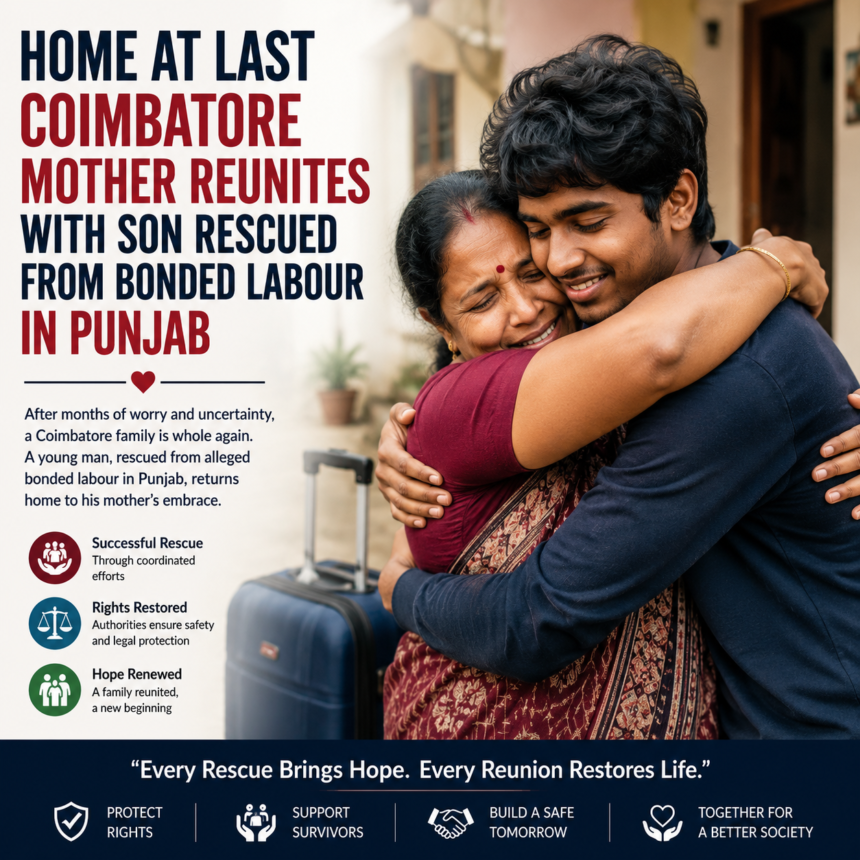
A mother from Coimbatore has been reunited with her son after he was rescued from alleged bonded labour in Punjab. The successful rescue, supported by authorities and social welfare organisations, brought an end to months of uncertainty for the family while highlighting the continued importance of combating bonded labour and protecting workers’ rights.
Emotional Reunion Brings Relief to Coimbatore Family
In a heartwarming turn of events, a family in Coimbatore has been reunited after a young man who was reportedly trapped in bonded labour in Punjab was rescued and safely returned home.
For his mother, the reunion marked the end of a long period of anxiety and uncertainty. After months of worrying about her son’s safety and well-being, she was finally able to embrace him once again following the rescue operation.
The case has drawn attention to the ongoing issue of bonded labour and the importance of coordinated efforts by authorities and support organisations to identify, rescue, and rehabilitate vulnerable workers.
Follow for more Instant news in Today’s Coimbatore
How the Rescue Took Place
According to reports, the young man had travelled outside Tamil Nadu for employment but allegedly became trapped in exploitative working conditions.
After information regarding his situation reached the concerned authorities, coordinated efforts were initiated to locate him and ensure his safe rescue.
The operation involved cooperation between officials and organisations working to protect the rights of workers and eliminate bonded labour practices.
Following the successful rescue, arrangements were made for his return to Coimbatore, where he was welcomed home by his family.
A Mother’s Long Wait Finally Ends
The emotional reunion became the most touching moment of the entire incident.
For months, the family had lived with uncertainty, hoping for news about their loved one. His safe return brought immense relief and joy, reminding many of the human impact behind labour exploitation cases.
The reunion also highlights the resilience of families who continue searching for missing or exploited relatives despite difficult circumstances.
Read to know more about the Ministry of Labour & Employment (Government of India)
Bonded Labour Remains a Serious Concern
Although significant progress has been made in eliminating bonded labour in India, isolated cases continue to emerge in different parts of the country.
Bonded labour can involve:
- Restriction of movement.
- Withholding of wages.
- Debt-based exploitation.
- Forced or coercive working conditions.
- Denial of basic rights and freedom.
Authorities continue to work with labour departments, police, and social welfare organisations to identify victims and ensure legal protection.
Importance of Worker Awareness
Experts stress that awareness plays an important role in preventing labour exploitation.
Workers seeking employment outside their home States are encouraged to:
- Verify employers before accepting jobs.
- Keep copies of identity documents.
- Share travel and workplace details with family.
- Stay connected with trusted contacts.
- Report suspicious or exploitative conditions to authorities immediately.
Such precautions can help reduce the risk of exploitation and improve worker safety.
Read to know more about the National Human Rights Commission (NHRC)
Government and NGO Support
Rescue and rehabilitation efforts often involve cooperation between:
- Labour Departments.
- District Administrations.
- Police authorities.
- Child and labour welfare organisations.
- Non-governmental organisations (NGOs).
- Human rights groups.
Beyond rescue, rehabilitation programmes focus on helping victims rebuild their lives through counselling, legal support, and access to welfare schemes.
Why This Story Matters
This reunion is not only a personal victory for one family but also a reminder of the importance of protecting vulnerable workers and ensuring that labour rights are respected across the country.
It also demonstrates how timely intervention and coordination among authorities can help reunite families and provide victims with an opportunity to begin a new chapter.
Key Highlights
- A Coimbatore mother reunited with her son after his rescue from alleged bonded labour in Punjab.
- Authorities coordinated efforts to ensure his safe return.
- The case highlights the importance of protecting workers from exploitation.
- Families and officials welcomed the successful reunion.
- The incident draws attention to labour rights and rehabilitation efforts.
Rehabilitation After Rescue: Helping Survivors Rebuild Their Lives
Rescuing a victim from bonded labour is only the first step. Once individuals are brought to safety, the focus shifts to rehabilitation, counselling, legal support, and reintegration into society.
Government departments and social welfare organisations typically assist rescued workers by providing:
- Temporary shelter and immediate care.
- Medical examination and treatment, where required.
- Psychological counselling.
- Legal assistance for pursuing justice.
- Access to government welfare schemes.
- Support in finding safe and dignified employment opportunities.
The goal is not only to rescue victims but also to help them rebuild their lives with security and dignity.
Understanding Bonded Labour in India
Bonded labour occurs when a person is forced to work to repay a debt or under conditions where they cannot leave due to coercion, threats, withheld wages, or other forms of exploitation.
The Bonded Labour System (Abolition) Act, 1976 abolished bonded labour in India, making such practices illegal. Victims are entitled to protection, rehabilitation, and legal support under the law.
Authorities continue to conduct inspections and rescue operations across the country to identify and assist individuals trapped in exploitative working conditions.
The Importance of Interstate Coordination
Cases involving workers employed outside their home State require close cooperation between multiple government agencies.
Successful rescue operations often involve:
- Labour Departments.
- District Administrations.
- State Police.
- Local law enforcement in the destination State.
- Social welfare organisations.
- Human rights groups.
This coordinated approach helps ensure the safe rescue and return of workers to their families while facilitating legal action where necessary.
Raising Awareness to Prevent Labour Exploitation
Many workers migrate in search of better employment opportunities. Awareness and precaution can significantly reduce the risk of exploitation.
Experts recommend that job seekers:
- Verify employers and recruitment agencies before accepting work.
- Avoid handing over original identity documents.
- Share travel and workplace details with family members.
- Keep emergency contact numbers accessible.
- Seek help immediately if wages are withheld or movement is restricted.
Community awareness campaigns also play an important role in identifying and reporting suspected cases of bonded labour.
A Story of Hope and Resilience
Beyond the legal and administrative aspects, this incident is a powerful reminder of the resilience of families who never stop searching for their loved ones.
For the Coimbatore mother, the reunion with her son marked the end of months of uncertainty and emotional distress. Their story highlights the importance of timely intervention, compassion, and coordinated efforts in protecting vulnerable workers.
While challenges remain, successful rescue operations like this reinforce the need for continued vigilance against labour exploitation and support for affected families.
Key Takeaways
- A Coimbatore family has been reunited after the successful rescue of a son from alleged bonded labour in Punjab.
- Authorities and support organisations coordinated the rescue and facilitated his safe return.
- The incident underscores the importance of enforcing labour laws and protecting workers’ rights.
- Rehabilitation and counselling are essential components of helping survivors rebuild their lives.
- Public awareness and responsible recruitment practices are crucial in preventing labour exploitation.
Follow for more News Inside Coimbatore
Frequently Asked Questions (FAQs)
1. What happened in this case?
A young man from Coimbatore was rescued from alleged bonded labour in Punjab and safely reunited with his mother after coordinated efforts by the concerned authorities.
2. What is bonded labour?
Bonded labour is a form of labour exploitation where individuals are forced to work under coercive conditions, often linked to debt or restrictions on their freedom. It is prohibited under Indian law.
3. Which law abolishes bonded labour in India?
The Bonded Labour System (Abolition) Act, 1976 abolished bonded labour and provides legal protection for victims.
4. Who helps rescue bonded labour victims?
Rescue operations are typically carried out through coordination between labour departments, police, district administrations, and social welfare organisations.
5. How can workers protect themselves?
Workers should verify employers, keep family informed of their location, retain personal documents, and seek help immediately if they face exploitation or restrictions on their freedom.
Conclusion
The reunion of a Coimbatore mother with her rescued son is a moving reminder of the importance of protecting workers from exploitation and ensuring that every individual has the right to safe and dignified employment. While the successful rescue brings relief to one family, it also highlights the continued need for strong enforcement of labour laws, greater public awareness, and coordinated action against bonded labour.
As migration for employment continues across India, safeguarding workers’ rights and promoting ethical labour practices remain essential. Stories like this reinforce the value of timely intervention, community support, and effective collaboration between authorities to reunite families and restore hope.
Today’s Coimbatore will continue to follow important social issues, labour rights developments, and human-interest stories that matter to the people of Coimbatore and Tamil Nadu.
Lorem ipsum dolor sit amet, consectetur adipiscing elit. Ut elit tellus, luctus nec ullamcorper mattis, pulvinar dapibus leo.