TL;DR
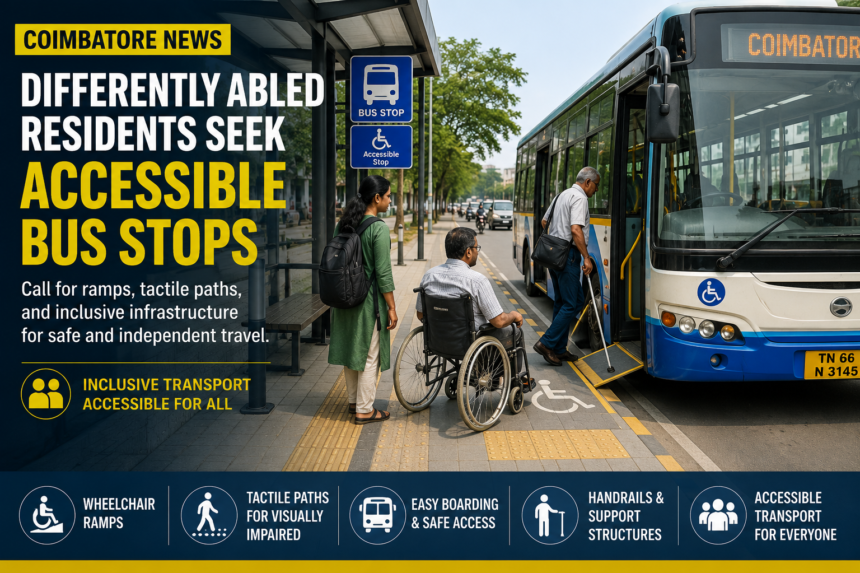
Differently abled residents and disability rights advocates have appealed to the Coimbatore administration to improve the accessibility of bus stops across the city. They have highlighted the need for ramps, tactile paving, accessible boarding facilities, proper pathways, and universal design standards to make public transportation safer and more inclusive for everyone.
Differently Abled Residents Call for Inclusive Bus Stops in Coimbatore
Residents with disabilities in Coimbatore have urged civic authorities to upgrade bus stops with better accessibility features, saying many existing facilities remain difficult to use for people with mobility, visual, and other physical impairments.
Accessibility advocates have pointed out that while public transport is an essential service, the lack of inclusive infrastructure at bus stops continues to create daily challenges for differently abled commuters, senior citizens, and people with temporary mobility issues.
The demand focuses on ensuring that public transportation is equally accessible to all sections of society.
Need for Barrier-Free Public Transport
Public transportation plays a vital role in enabling education, employment, healthcare, and independent living. However, inaccessible infrastructure can prevent many citizens from using these services safely.
Advocates have requested authorities to introduce features such as:
- Wheelchair-accessible ramps.
- Tactile paving for visually impaired commuters.
- Non-slip walkways.
- Accessible bus boarding points.
- Handrails and support structures.
- Audible and visual information systems.
- Proper lighting and clear signage.
- Obstacle-free pedestrian pathways.
These improvements would benefit not only persons with disabilities but also elderly commuters, pregnant women, parents with strollers, and people recovering from injuries.
Importance of Universal Accessibility
Universal accessibility refers to designing public spaces that can be used safely and independently by everyone, regardless of age or physical ability.
Experts note that accessible transport infrastructure contributes to:
- Greater independence for persons with disabilities.
- Improved public safety.
- Better mobility for senior citizens.
- Inclusive urban development.
- Equal access to education and employment.
- Higher quality of life.
Creating inclusive public spaces is also aligned with India’s broader commitment to accessible cities and equal opportunities.
Coimbatore’s Urban Development Goals
As Coimbatore continues to expand its urban infrastructure, accessibility has become an increasingly important aspect of city planning.
Residents believe that incorporating universal design principles into future transport projects can help the city become more inclusive while supporting sustainable and people-friendly mobility.
Improving accessibility at bus stops could complement ongoing efforts to modernise public infrastructure and strengthen public transport services.
Benefits of Accessible Bus Stops
Accessible bus stops can provide multiple long-term benefits, including:
- Safer travel for differently abled commuters.
- Better access to public services.
- Increased public transport usage.
- Reduced dependence on private vehicles.
- Enhanced social inclusion.
- Improved urban mobility.
- Greater independence for citizens with disabilities.
Such improvements contribute to creating a more equitable and accessible city for all.
Follow for more instant Latest updates in Coimbatore
Why Accessible Public Transport Matters
An accessible public transport system is essential for creating an inclusive city where every resident can travel safely, independently, and with dignity. For persons with disabilities, reliable access to buses and bus stops directly impacts education, employment, healthcare, and social participation.
When bus stops are designed with accessibility in mind, they not only support differently abled commuters but also benefit senior citizens, pregnant women, children, and people with temporary mobility challenges.
Inclusive transport infrastructure helps ensure that public services are available to everyone, regardless of physical ability.
Accessibility Features That Can Make a Difference
Experts in universal design recommend several improvements that can significantly enhance the accessibility of bus stops.
Some key features include:
- Wheelchair-accessible ramps.
- Tactile paving for visually impaired commuters.
- Low-height kerbs for easier boarding.
- Handrails and support bars.
- Slip-resistant flooring.
- Covered waiting areas with seating.
- Clear directional and route signage.
- Audio and visual passenger information systems.
- Well-lit pathways.
- Obstacle-free pedestrian access.
Implementing these features can make public transport safer and more comfortable for all users.
Universal Accessibility: A Shared Responsibility
Creating accessible infrastructure requires collaboration between government agencies, transport authorities, urban planners, architects, engineers, and local communities.
As Coimbatore continues to grow, integrating accessibility into every stage of infrastructure planning can help build a city that is inclusive by design rather than through later modifications.
Community feedback from persons with disabilities also plays a vital role in identifying practical improvements and ensuring that new facilities meet real-world needs.
To read to know more about the Rights of Persons with Disabilities Act, 2016
Accessibility and Sustainable Urban Development
Accessible public transport aligns with the broader goals of sustainable and people-centric urban development.
Benefits include:
- Increased public transport usage.
- Reduced dependence on private vehicles.
- Improved road safety.
- Better connectivity across the city.
- Greater independence for persons with disabilities.
- Enhanced quality of life.
- More inclusive economic participation.
Investing in accessible infrastructure contributes to a city that is more resilient, equitable, and future-ready.
Government Initiatives Supporting Accessibility
India has introduced several initiatives aimed at improving accessibility in public spaces and transport infrastructure, including:
- The Accessible India Campaign (Sugamya Bharat Abhiyan), which promotes barrier-free access to public buildings, transport systems, and information services.
- The Rights of Persons with Disabilities (RPwD) Act, 2016, which provides legal safeguards and encourages equal access to public infrastructure.
- Smart City projects that increasingly incorporate universal design principles in urban planning.
Such initiatives provide a framework for cities like Coimbatore to strengthen accessibility in public transport.
To know more about the Accessible India Campaign (Sugamya Bharat Abhiyan)
Frequently Asked Questions (FAQs)
1. Why are accessible bus stops important?
Accessible bus stops enable persons with disabilities, senior citizens, and people with mobility challenges to use public transport safely and independently.
2. What improvements have been requested?
Advocates have highlighted the need for wheelchair ramps, tactile paving, accessible boarding points, clear signage, handrails, and safer pedestrian pathways.
3. Who benefits from accessible bus stops?
While primarily designed for persons with disabilities, accessible infrastructure also benefits elderly commuters, pregnant women, parents with strollers, and individuals recovering from injuries.
4. What is universal accessibility?
Universal accessibility is the practice of designing public spaces and services so they can be used safely and comfortably by everyone, regardless of age or physical ability.
5. How can accessible transport improve a city?
It encourages greater public transport usage, improves mobility, promotes social inclusion, enhances public safety, and supports sustainable urban development.
Conclusion
The call for accessible bus stops in Coimbatore highlights the importance of designing public infrastructure that serves every member of the community. As the city continues to expand and modernise, incorporating universal accessibility into transport planning can help ensure that public services remain inclusive, safe, and user-friendly.
Improving bus stop accessibility is not only about infrastructure – it is about enabling equal opportunities, independent mobility, and dignity for persons with disabilities while creating a better commuting experience for everyone.
Today’s Coimbatore will continue to follow developments on this issue and bring readers the latest updates on civic infrastructure, public transport, accessibility, and urban development across the city.
Lorem ipsum dolor sit amet, consectetur adipiscing elit. Ut elit tellus, luctus nec ullamcorper mattis, pulvinar dapibus leo.