TL;DR
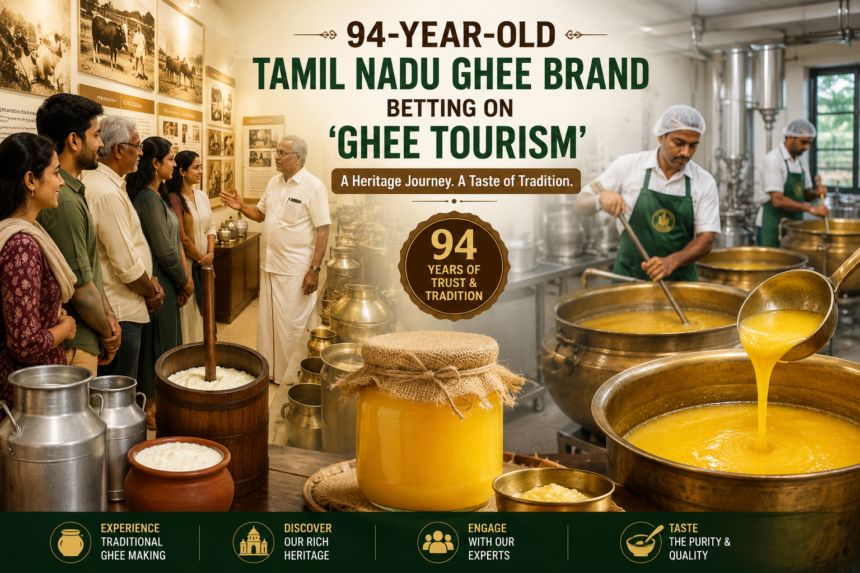
A 94-year-old ghee brand in Tamil Nadu is embracing a unique concept called ‘Ghee Tourism’, inviting visitors to experience the traditional process of ghee production while learning about the region’s rich dairy heritage. The initiative aims to preserve traditional food-making techniques, promote culinary tourism, and create a deeper connection between consumers and one of India’s most cherished food products.
A Heritage Ghee Brand Reinvents Tradition Through Tourism
A renowned 94-year-old ghee brand from Tamil Nadu is taking an innovative approach to preserving its legacy by launching a unique ‘Ghee Tourism’ experience.
Rather than simply selling its products, the brand now offers visitors an opportunity to explore the journey of ghee – from fresh milk collection and butter preparation to the traditional process of producing aromatic clarified butter. The initiative blends food, culture, heritage, and tourism, creating an educational and immersive experience for visitors of all ages.
With growing interest in authentic food experiences, the concept is expected to appeal to families, culinary enthusiasts, students, tourists, and anyone interested in India’s traditional dairy practices.
What Is ‘Ghee Tourism’?
‘Ghee Tourism‘ is a form of culinary and heritage tourism where visitors are invited to experience the complete story behind one of India’s most iconic food products.
The experience may include:
- Understanding traditional milk processing.
- Learning how butter is transformed into ghee.
- Exploring dairy heritage and production techniques.
- Visiting manufacturing facilities.
- Interacting with experts involved in dairy production.
- Tasting authentic ghee-based products.
- Learning about the nutritional and cultural significance of ghee.
The initiative goes beyond factory visits by offering an engaging and educational experience centred on India’s food traditions.
Celebrating a 94-Year Legacy
For nearly a century, the brand has built a reputation for producing quality ghee while remaining closely connected to Tamil Nadu’s dairy traditions.
Its long-standing presence reflects:
- Commitment to quality.
- Traditional production methods.
- Consumer trust built over generations.
- Contribution to the dairy industry.
- Preservation of regional food heritage.
By introducing tourism into its business model, the brand aims to ensure that this legacy continues to inspire future generations.
Follow for more Latest News Updates in Coimbatore
Why Food Tourism Is Growing
Across India and around the world, travellers are increasingly seeking authentic experiences that connect them with local culture, cuisine, and traditions.
Food tourism has become popular because it allows visitors to:
- Experience local culinary traditions.
- Understand traditional production methods.
- Support heritage businesses.
- Promote sustainable tourism.
- Learn directly from producers.
- Discover regional specialties.
Initiatives such as Ghee Tourism reflect this growing trend of experiential travel, where education and cultural appreciation are just as important as sightseeing.
Benefits for Tourism and Local Economy
The concept of Ghee Tourism has the potential to create value beyond the dairy industry by supporting tourism and local communities.
Potential benefits include:
- Increased tourist visits.
- Promotion of Tamil Nadu’s food heritage.
- Support for dairy farmers and producers.
- Employment opportunities.
- Greater awareness of traditional food production.
- Encouragement of rural and heritage tourism.
If successful, the initiative could inspire similar experiences around other traditional Indian foods and agricultural products.
Read to know more about the National Dairy Development Board (NDDB)
The Cultural Significance of Ghee in India
Ghee has been an essential part of Indian cuisine, Ayurveda, and religious traditions for thousands of years. From festive meals to temple offerings, it holds a special place in households across the country.
In Tamil Nadu, ghee is widely used in:
- Traditional South Indian meals.
- Temple prasadam and religious rituals.
- Sweets and festive delicacies.
- Ayurvedic preparations.
- Daily home cooking.
- Wedding feasts and celebrations.
Beyond its culinary value, ghee represents purity, nourishment, and cultural heritage, making it one of India’s most treasured food products.
How Ghee Tourism Creates a Unique Visitor Experience
Modern travellers are increasingly seeking experiences that allow them to connect with local traditions rather than simply visit destinations. Ghee Tourism offers an opportunity to understand the craftsmanship and heritage behind one of India’s most iconic dairy products.
Visitors may experience:
- Learning about the history of the heritage brand.
- Understanding milk collection and dairy processing.
- Observing traditional ghee preparation methods.
- Exploring quality control and packaging processes.
- Tasting freshly prepared ghee and ghee-based delicacies.
- Interacting with dairy experts and producers.
- Discovering the role of dairy farming in Tamil Nadu’s rural economy.
The initiative combines education, culture, and food, creating a memorable experience for families, students, culinary enthusiasts, and tourists.
Supporting Heritage Brands Through Experiential Tourism
Heritage brands often carry decades of trust and craftsmanship. By opening their facilities to visitors, they create stronger connections with consumers while preserving traditional knowledge.
Experiential tourism initiatives can help:
- Increase awareness of traditional food production.
- Preserve age-old manufacturing techniques.
- Encourage younger generations to appreciate local heritage.
- Promote sustainable tourism.
- Boost brand credibility through transparency.
- Strengthen regional economies by attracting visitors.
For long-established businesses, such initiatives provide a way to remain relevant while celebrating their legacy.
Read to know more about the Food Safety and Standards Authority of India (FSSAI)
Tamil Nadu’s Growing Food Tourism Landscape
Tamil Nadu has become a preferred destination for travellers seeking authentic culinary experiences. From traditional Chettinad cuisine to filter coffee, temple prasadam, and regional sweets, the state offers a rich variety of food traditions.
The introduction of Ghee Tourism adds another dimension to Tamil Nadu’s food tourism sector by highlighting the dairy industry’s contribution to the state’s cultural identity.
Similar food tourism experiences have gained popularity worldwide, allowing visitors to explore local products such as cheese, chocolate, olive oil, tea, coffee, and wine. Ghee tourism brings this concept to India’s dairy heritage.
A Step Towards Sustainable Tourism
Experiential initiatives like Ghee Tourism can also contribute to sustainable tourism by encouraging responsible travel and supporting local communities.
Potential benefits include:
- Promoting rural and heritage tourism.
- Creating employment opportunities.
- Supporting dairy farmers.
- Encouraging local entrepreneurship.
- Preserving traditional food knowledge.
- Inspiring future generations to value indigenous practices.
Such programmes demonstrate how heritage businesses can innovate while staying rooted in tradition.
Frequently Asked Questions (FAQs)
1. What is Ghee Tourism?
Ghee Tourism is an experiential programme that allows visitors to learn about traditional ghee production, dairy heritage, and the cultural significance of ghee through guided visits and demonstrations.
2. Why is this initiative unique?
It combines food, culture, education, and tourism by offering visitors an opportunity to witness the traditional process of making ghee while learning about a heritage dairy brand with over nine decades of history.
3. Who can visit?
The experience is suitable for families, students, food enthusiasts, culinary travellers, researchers, and anyone interested in India’s dairy traditions. Visitors should check with the organisers for tour availability and booking details.
4. How does Ghee Tourism benefit Tamil Nadu?
The initiative promotes food tourism, supports local dairy communities, preserves traditional knowledge, and attracts visitors interested in authentic cultural experiences.
5. Why is ghee important in Indian culture?
Ghee has long been valued in Indian cuisine, religious rituals, Ayurveda, and festive traditions. It is widely used in cooking, temple offerings, sweets, and ceremonial occasions across the country.
Conclusion
The launch of Ghee Tourism by a 94-year-old Tamil Nadu heritage brand is an innovative step that blends tradition with modern tourism. By inviting visitors to experience the complete journey of ghee production, the initiative showcases the state’s rich dairy heritage while creating meaningful and educational travel experiences.
As experiential travel continues to gain popularity, initiatives like this demonstrate how heritage brands can preserve their legacy, strengthen consumer trust, and contribute to sustainable tourism. It also reinforces Tamil Nadu’s growing reputation as a destination for authentic culinary and cultural experiences.
Today’s Coimbatore will continue to bring you the latest updates on food, tourism, business, culture, and inspiring stories from Coimbatore, Tamil Nadu, and beyond.
Lorem ipsum dolor sit amet, consectetur adipiscing elit. Ut elit tellus, luctus nec ullamcorper mattis, pulvinar dapibus leo.