TL;DR
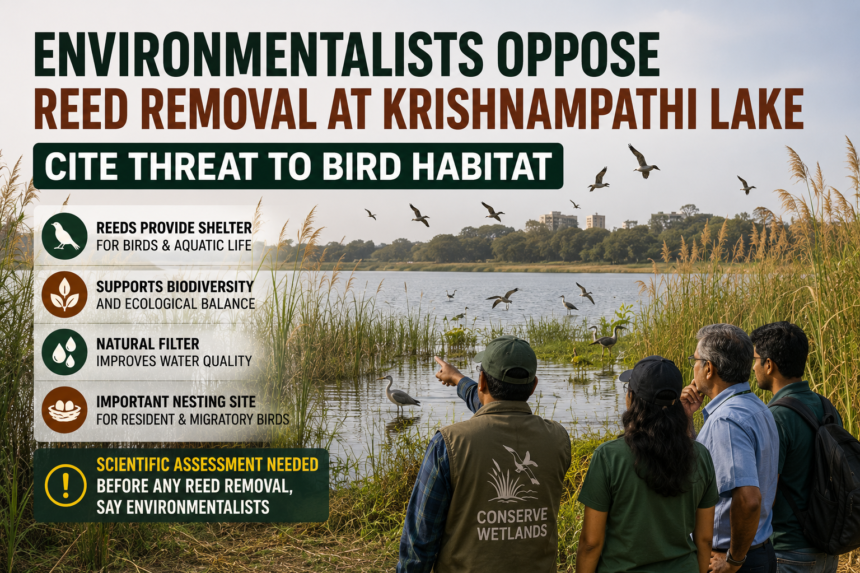
Environmentalists in Coimbatore have opposed the proposed removal of reeds at Krishnampathi Lake, arguing that the vegetation provides essential shelter and nesting space for birds while supporting the lake’s ecological balance. They have urged authorities to adopt scientific conservation methods that protect biodiversity while carrying out lake management activities.
Environmentalists Raise Concerns Over Reed Removal at Krishnampathi Lake
A debate over wetland conservation has emerged in Coimbatore after environmentalists voiced concerns regarding the proposed removal of reeds from Krishnampathi Lake. According to conservationists, the reed beds play an important ecological role by providing shelter, breeding grounds, and protection for numerous bird species and aquatic organisms.
They argue that large-scale removal of reeds without a detailed ecological assessment could disturb the natural habitat and negatively impact biodiversity.
The issue has once again highlighted the importance of balancing lake restoration efforts with wildlife conservation.
Follow for more latest updates in Coimbatore
Why Reed Beds Are Important for Wetlands
Reeds are often misunderstood as unwanted vegetation, but environmental experts point out that they are a vital part of healthy wetland ecosystems.
Reed beds help to:
- Provide nesting sites for birds.
- Offer shelter for fish, amphibians, and insects.
- Naturally filter pollutants from water.
- Improve water quality.
- Prevent shoreline erosion.
- Support biodiversity.
- Maintain ecological balance.
Many migratory and resident bird species depend on reed beds during different stages of their life cycle.
Read to know more abou the Tamil Nadu Forest Department
Concerns Raised by Environmentalists
Environmental groups believe that indiscriminate reed removal may lead to several ecological consequences.
According to conservationists, potential impacts include:
- Loss of nesting habitats.
- Disturbance to migratory birds.
- Reduced biodiversity.
- Increased shoreline erosion.
- Decline in aquatic organisms.
- Changes in the lake’s natural ecosystem.
They have therefore appealed for scientific studies and expert consultation before undertaking major vegetation removal activities.
Balancing Lake Management and Conservation
Experts acknowledge that periodic maintenance of lakes may sometimes be necessary to improve water flow, prevent invasive species growth, or support restoration efforts.
However, they stress that such activities should be:
- Based on ecological assessments.
- Scientifically planned.
- Environmentally sustainable.
- Monitored by experts.
- Conducted with minimal disturbance to wildlife.
A balanced approach can help achieve both lake management objectives and biodiversity conservation.
Read to know more about the Bombay Natural History Society (BNHS)
Krishnampathi Lake’s Ecological Importance
Krishnampathi Lake forms part of Coimbatore’s network of urban water bodies and contributes to the city’s environmental health.
The lake supports:
- Native vegetation.
- Resident birds.
- Migratory bird species.
- Aquatic biodiversity.
- Groundwater recharge.
- Urban climate regulation.
Conserving these ecological functions is considered essential for maintaining a healthy urban ecosystem.
Growing Focus on Wetland Conservation
Across India, wetlands are receiving increasing attention due to their role in biodiversity conservation, climate resilience, and water security.
Environmentalists say protecting lakes like Krishnampathi contributes to:
- Sustainable urban development.
- Wildlife conservation.
- Flood mitigation.
- Water resource management.
- Climate adaptation.
- Ecological resilience.
The discussion surrounding reed removal reflects the broader challenge of balancing development and conservation.
Follow for more interesting updates Latest Environment & Wildlife News from Coimbatore
Why Wetlands Matter for Urban Ecosystems
Wetlands are among the world’s most productive ecosystems, providing essential environmental services that benefit both wildlife and urban communities. Lakes like Krishnampathi Lake play a crucial role in maintaining Coimbatore’s ecological balance.
Healthy wetlands contribute to:
- Improving groundwater recharge.
- Naturally filtering pollutants from water.
- Reducing the impact of urban flooding.
- Supporting biodiversity.
- Regulating local temperatures.
- Improving air quality.
- Providing habitats for birds, fish, amphibians, and insects.
Protecting these ecosystems ensures that cities remain environmentally resilient while preserving natural resources for future generations.
The Role of Reed Beds in Bird Conservation
Environmental experts emphasize that reed beds are more than just aquatic vegetation – they form a vital part of wetland habitats.
Reeds provide:
- Safe nesting sites for resident birds.
- Shelter for migratory bird species during seasonal visits.
- Protection for young chicks from predators.
- Habitat for fish, frogs, dragonflies, and aquatic insects.
- Natural breeding grounds for several wetland species.
- Buffer zones that reduce shoreline erosion.
The presence of healthy reed beds often indicates a thriving wetland ecosystem capable of supporting diverse wildlife.
Read to know more about the Ramsar Convention on Wetlands
Importance of Scientific Lake Management
Experts suggest that lake restoration and maintenance should always be guided by scientific studies and ecological assessments.
A sustainable lake management approach typically includes:
- Ecological surveys before any intervention.
- Identification of native and invasive plant species.
- Biodiversity monitoring.
- Seasonal planning to avoid disturbing breeding birds.
- Water quality assessments.
- Consultation with environmental experts and local stakeholders.
Such an approach helps achieve environmental restoration goals while minimizing impacts on wildlife.
Balancing Restoration with Biodiversity Protection
Lake restoration projects are essential for improving water quality and maintaining urban ecosystems. However, conservationists stress that restoration efforts should be carefully planned to avoid unintended ecological consequences.
A balanced strategy may involve:
- Selective removal of invasive vegetation where necessary.
- Preserving native reed beds that support biodiversity.
- Continuous ecological monitoring.
- Public awareness and community participation.
- Long-term habitat management plans.
This integrated approach can help ensure that restoration enhances rather than diminishes the ecological value of urban lakes.
Community Participation in Conservation
Environmental protection is most effective when local communities actively participate.
Residents can contribute by:
- Avoiding littering around lakes.
- Participating in clean-up drives.
- Reporting illegal dumping or encroachments.
- Supporting bird conservation initiatives.
- Respecting protected wetland habitats.
- Promoting awareness about biodiversity conservation.
Citizen involvement plays a key role in safeguarding Coimbatore’s natural heritage.
Read to know more about the Ministry of Environment, Forest and Climate Change (MoEFCC)
Frequently Asked Questions (FAQs)
1. Why are environmentalists opposing reed removal at Krishnampathi Lake?
They believe that reed beds provide essential habitats for birds and other wildlife and that large-scale removal could affect the lake’s ecological balance.
2. What role do reeds play in wetlands?
Reeds help improve water quality, stabilize shorelines, provide nesting habitats for birds, and support aquatic biodiversity.
3. Can lake restoration and biodiversity conservation happen together?
Yes. Environmental experts recommend scientifically planned restoration that improves lake health while protecting native habitats and wildlife.
4. Why is Krishnampathi Lake important?
The lake supports biodiversity, contributes to groundwater recharge, helps regulate the local climate, and forms part of Coimbatore’s urban wetland network.
5. How can citizens help protect urban lakes?
People can participate in conservation activities, avoid polluting water bodies, support awareness campaigns, and report environmental violations to the authorities.
Conclusion
The discussion surrounding Krishnampathi Lake highlights the need to balance environmental restoration with biodiversity conservation. While maintaining urban lakes is important for improving water quality and ecological health, conservationists emphasize that interventions should be guided by scientific assessments and designed to protect the habitats that many species depend upon.
Reed beds are an integral part of healthy wetland ecosystems, supporting birds, aquatic life, and natural water filtration. Careful planning and collaboration between government agencies, environmental experts, and local communities can help ensure that restoration projects strengthen rather than compromise these ecological functions.
As Coimbatore continues its efforts to preserve its lakes and wetlands, sustainable conservation practices will remain essential for protecting biodiversity and ensuring a healthier environment for future generations.
Today’s Coimbatore will continue to provide verified updates on environmental conservation, wildlife protection, civic initiatives, and sustainable development across the region.
Lorem ipsum dolor sit amet, consectetur adipiscing elit. Ut elit tellus, luctus nec ullamcorper mattis, pulvinar dapibus leo.