TL;DR
The Coimbatore District Museum at Semmozhi Poonga is facing space and display challenges after relocation. Several artefacts, including sculptures, burial urns, manuscripts, coins, wooden carvings and inscriptions, need proper display arrangements. Museum officials have sought additional space to showcase more collections and improve visitor experience.
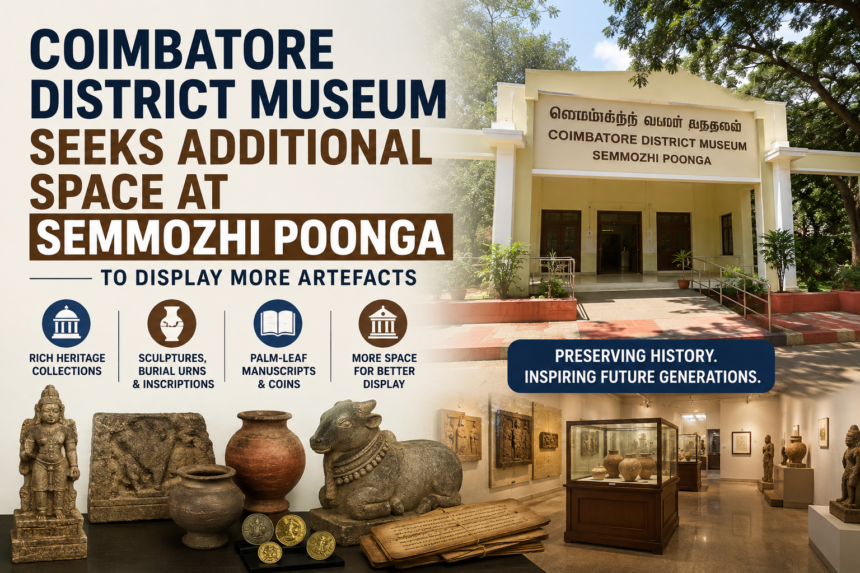
Coimbatore District Museum Seeks Additional Space at Semmozhi Poonga to Display More Artefacts
The Coimbatore District Museum has sought additional space at Semmozhi Poonga to display more artefacts and improve the overall visitor experience. The museum, which was shifted from the Nehru Stadium commercial complex to Semmozhi Poonga, is now facing a space shortage as several historic items still need proper display arrangements.
According to reports, the museum currently houses important collections such as sculptures, stone inscriptions, burial urns, palm-leaf manuscripts, wooden carvings, coins, animal specimens and other heritage objects linked to the history and culture of the Coimbatore region. However, due to limited space and pending display work, some artefacts are yet to be arranged in a visitor-friendly manner.
For more information to follow todays coimbatore
Why the Coimbatore District Museum Needs More Space
The Coimbatore District Museum plays an important role in preserving the cultural, archaeological and historical identity of the region. Museums are not only places to keep old objects; they help people understand how earlier generations lived, worked, worshipped and built communities.
The current concern is mainly about space. After relocation, visitor numbers have improved because Semmozhi Poonga attracts public attention. But the available gallery area is not enough to properly display every collection. Reports also mention that some sculptures and historical items were found placed in unsuitable areas due to unfinished arrangements.
This makes the request for additional space important. More room will help the museum arrange artefacts neatly, provide description boards, improve walking space for visitors and create a better educational experience.
Museum Shifted to Semmozhi Poonga After Long Wait
The Coimbatore District Museum received a dedicated space inside Semmozhi Poonga after years of operating from rented premises. The New Indian Express reported in 2025 that around 3,600 square feet was allotted for the museum inside the Semmozhi Poonga campus. The museum collection includes around 1,500 archaeological and anthropological artefacts connected to Coimbatore’s history and culture.
The museum was established in Coimbatore in 1990 and later moved to the Nehru Stadium premises in 2009. The move to Semmozhi Poonga was expected to give the museum better visibility and a stronger cultural identity.
What Artefacts Are Displayed at the Coimbatore District Museum?
The Coimbatore District Museum includes a wide range of collections that reflect the region’s past. Some of the important categories include:
Archaeological Artefacts
These may include stone tools, burial urns, megalithic remains, inscriptions, coins and ancient objects connected to early settlements.
Sculptures and Stone Inscriptions
Stone sculptures and inscriptions are valuable because they provide clues about old kingdoms, religious traditions, local rulers and social life.
Palm-Leaf Manuscripts
Palm-leaf manuscripts are an important part of Tamil literary and knowledge traditions. They help preserve older writings, local records and cultural memory.
Wooden Carvings and Folk Collections
Wooden carvings, folk objects and community artefacts show the lifestyle, beliefs and craft traditions of earlier generations.
Science and Natural History Collections
Reports mention collections such as animal specimens, a bull skeleton and other science-related displays, which can attract students and young visitors.
Why Proper Display Matters for Coimbatore Heritage
A museum’s value depends not only on the number of artefacts it owns but also on how well those artefacts are presented. A properly arranged display helps visitors understand the age, origin and meaning of every object.
For the Coimbatore District Museum, proper display boards are very important. Without name boards, descriptions or historical details, visitors may not fully understand the importance of the collections. Reports have noted that some displayed items lacked descriptions about origin, age and identity.
If additional space is provided, the museum can create themed sections such as archaeology, anthropology, tribal culture, stone inscriptions, folk traditions and natural history. This will make the museum more useful for school students, college students, researchers, tourists and families.
For more update to follow todays coimbatore
Semmozhi Poonga Can Become a Strong Cultural Destination
Semmozhi Poonga is already planned as a major public and cultural space in Coimbatore. According to the Chennai Rivers Restoration Trust project page, Semmozhi Poonga is being developed within the Coimbatore Central Prison campus area, with the first phase covering around 45 acres.
Having the Coimbatore District Museum inside such a large public space can increase awareness about local history. Visitors who come to the park can also visit the museum and learn about Coimbatore’s ancient, cultural and natural heritage.
This combination of park and museum can benefit the city in many ways:
It can improve heritage tourism.
It can support educational visits.
It can create awareness among children.
It can preserve local history for future generations.
It can make Semmozhi Poonga a complete cultural experience.
Visitor Experience Needs Improvement
The success of the Coimbatore District Museum depends heavily on visitor experience. A good museum should be easy to find, easy to understand and comfortable to explore.
Some improvements that can help include:
Clear signboards at Semmozhi Poonga.
Proper lighting inside the museum.
Description boards for every artefact.
Separate sections for different collections.
Safe display cases for valuable objects.
Guided tour options for students.
Digital QR code information for visitors.
Better storage space for items not on display.
These changes can make the museum more attractive and useful for the public.
Educational Value for Students and Researchers
The Coimbatore District Museum can become a powerful learning centre for students. Instead of learning history only from textbooks, students can see real objects connected to the past.
School and college students can learn about:
Coimbatore’s ancient settlements.
Tamil cultural traditions.
Megalithic burial practices.
Old writing systems and inscriptions.
Traditional crafts and folk life.
Natural history and local biodiversity.
For researchers, better display and cataloguing can make the museum a valuable academic resource. Museums support cultural studies, anthropology, archaeology, history and heritage research.
Get more update on the news to visite todays coimbatore
Importance of Protecting Artefacts
Artefacts are not ordinary objects. Once damaged, many of them cannot be replaced. Sculptures, manuscripts, inscriptions and burial urns require proper handling, storage and climate-safe display conditions.
The request for additional space at Semmozhi Poonga should be seen as part of a larger heritage protection effort. When artefacts are displayed in crowded or unfinished spaces, there is a higher risk of damage, dust exposure and poor visitor movement.
The Coimbatore District Museum needs enough space not only for public display but also for safe preservation. This includes storage rooms, conservation areas and secure display galleries.
How the Museum Can Help Coimbatore Tourism
Coimbatore is known for industry, education, textiles, engineering, temples, nature spots and food culture. But the city also has a strong historical background that needs more public attention.
A well-developed Coimbatore District Museum can become an important tourism point for visitors who want to understand the city beyond shopping and travel. Tourists visiting Semmozhi Poonga may also explore the museum if it is properly promoted.
This can support:
Local tourism growth.
Cultural awareness.
School trips.
Weekend family visits.
History-based city tours.
Public interest in heritage preservation.
For more information about the news to visite todays coimbatore
What Officials Can Consider Next
To make the Coimbatore District Museum more effective, authorities can consider a clear improvement plan. The museum needs more than just extra space; it needs proper planning, arrangement and public visibility.
Important steps may include:
Allocating additional display space.
Completing pending interior and display work.
Adding labels and descriptions for all artefacts.
Creating themed galleries.
Improving signboards inside Semmozhi Poonga.
Using digital information systems.
Planning student awareness programs.
Ensuring regular maintenance and security.
Such steps can turn the museum into one of Coimbatore’s most meaningful cultural attractions.
Final Thoughts
The request for additional space at Semmozhi Poonga is an important development for the Coimbatore District Museum. The museum holds valuable artefacts that tell the story of Coimbatore’s history, culture and people. But without enough space and proper display arrangements, visitors may not fully experience the importance of these collections.
With better planning, additional space and improved visitor facilities, the Coimbatore District Museum can become a strong heritage destination in the city. It can educate students, attract families, support tourism and preserve Coimbatore’s cultural memory for future generations.