TL;DR
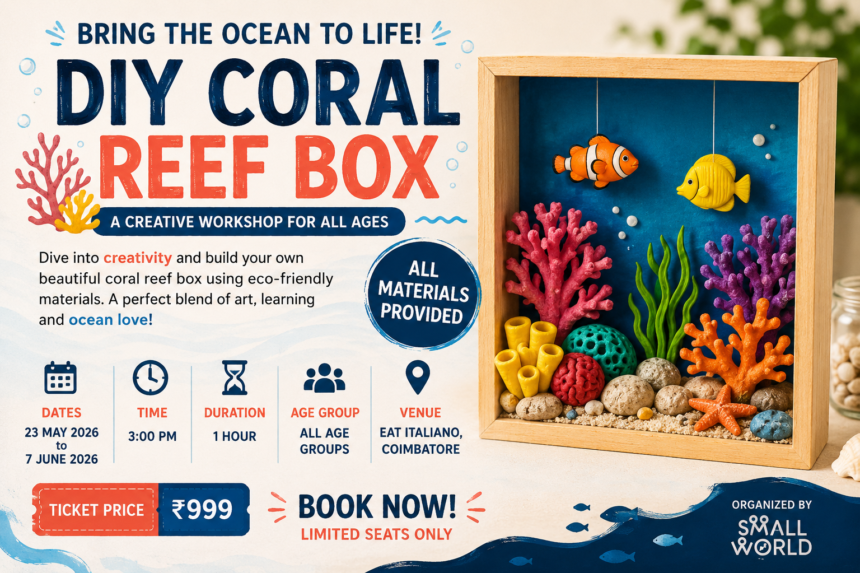
Looking for a creative weekend activity in Coimbatore? The DIY Coral Reef Box Workshop in Coimbatore is offering an engaging hands-on experience where participants can build colorful coral reef-themed art boxes using provided materials. Hosted at Eat Italiano, this workshop blends creativity, storytelling, and environmental awareness into a fun activity suitable for all age groups.
Coimbatore continues to grow as a city that welcomes not only businesses and startups, but also creative and family-friendly experiences. One such event currently attracting attention is the DIY Coral Reef Box Workshop in Coimbatore, a unique ocean-themed craft workshop designed for children, parents, and art lovers.
From storytelling and creativity to environmental awareness, this workshop promises more than just a simple art session. It brings together imagination, learning, and hands-on fun in a way that appeals to people of all age groups.
As weekend activities and creative events become increasingly popular in the city, workshops like this are helping Coimbatore build a stronger community around art, education, and family engagement.
👉 For More news like this, visit Todays Coimbatore News Directory
What is the DIY Coral Reef Box Workshop in Coimbatore?
The DIY Coral Reef Box Workshop in Coimbatore is an interactive art and craft session where participants create their own miniature coral reef-themed display boxes using colorful materials and ocean-inspired designs.
According to the event details, all materials are provided during the workshop, making it beginner-friendly and accessible even for first-time participants.
The concept behind the workshop is simple yet engaging:
- Build a decorative coral reef box
- Learn about ocean ecosystems
- Explore creativity through hands-on crafting
- Spend quality time with friends or family
Unlike regular art classes, this experience combines creativity with environmental storytelling, making it both entertaining and educational.
BookMyShow Event URL Here
Why Creative Workshops Are Becoming Popular in Coimbatore
Over the last few years, there has been a noticeable rise in demand for creative workshops in Coimbatore. Families are actively searching for experiences that go beyond malls and movie outings.
Today’s parents are looking for:
- Educational activities
- Skill-building experiences
- Screen-free entertainment
- Interactive family events
This shift has created strong interest in:
- DIY workshops
- Art and craft sessions
- Pottery classes
- Painting workshops
- Science-based creative events
The DIY Coral Reef Box Workshop in Coimbatore fits perfectly into this growing trend because it combines entertainment with learning.
It also creates a calm and engaging environment where participants can express creativity while understanding the beauty of marine ecosystems.
Event Details of DIY Coral Reef Box Workshop in Coimbatore
Here are the currently listed details for the event:
📍 Venue
Eat Italiano, Coimbatore
📅 Dates
23 May 2026 – 7 June 2026
⏰ Time
3:00 PM
🎟 Ticket Price
₹999
👨👩👧 Eligibility
Open for all age groups
🕒 Duration
Approximately 1 hour
The event is currently gaining attention among families searching for weekend activities in Coimbatore and unique art experiences for children.
What Makes This Workshop Different?
Many workshops focus only on crafts, but the DIY Coral Reef Box Workshop in Coimbatore stands out because of its ocean-inspired concept and storytelling approach.
Participants do not simply assemble decorative items. Instead, they experience:
- Color selection
- Miniature design creation
- Ocean ecosystem themes
- Environmental awareness
- Artistic expression
The coral reef theme itself adds visual excitement because of the bright colors and underwater-inspired elements used in the project.
This makes the workshop visually attractive for:
- Children
- Parents
- Social media users
- Creative hobbyists
Educational Value Behind the Workshop
One of the strongest aspects of the DIY Coral Reef Box Workshop in Coimbatore is its educational angle.
Coral reefs are among the most important ecosystems in the world. Through this activity, participants indirectly learn about:
- Marine biodiversity
- Ocean conservation
- Coral ecosystems
- Environmental awareness
Workshops like this encourage children to connect creativity with real-world learning.
Instead of traditional classroom teaching, experiential activities often help participants remember concepts more effectively.
This is why educational DIY experiences are becoming increasingly popular across India.
A Great Weekend Activity for Families in Coimbatore
Family-focused experiences are becoming a major trend in urban cities, and Coimbatore is no exception.
The DIY Coral Reef Box Workshop in Coimbatore offers:
- Parent-child bonding time
- Relaxed creative interaction
- Fun weekend engagement
- Memorable shared experiences
For many families, this type of workshop becomes more meaningful than ordinary entertainment because participants create something together.
Parents also appreciate activities that encourage imagination and reduce screen time.
👉 Looking for more family-friendly events in the city?
Follow Todays Coimbatore Events
The Growing Culture of Art & Craft Workshops in Coimbatore
The popularity of art and craft workshops in Coimbatore has significantly increased in recent years.
Local organizers are now introducing:
- DIY decor classes
- Resin art workshops
- Pottery sessions
- Canvas painting
- Eco-friendly craft activities
This growing trend shows how Coimbatore audiences are embracing creative experiences beyond traditional entertainment.
The DIY Coral Reef Box Workshop in Coimbatore is another example of how the city’s event culture is evolving toward interactive and meaningful activities.
Social Media Appeal of DIY Workshops
Visual workshops naturally perform well on social media because they produce colorful and engaging content.
The coral reef theme especially attracts:
- Instagram users
- Parents
- Creative creators
- DIY enthusiasts
Participants often share:
- Their completed projects
- Workshop moments
- Family experiences
- Behind-the-scenes creative process
This social sharing helps workshops gain organic popularity and community engagement.
Why Ocean-Themed Workshops Create Strong Audience Interest
Ocean-inspired creative activities instantly attract attention because of their:
- Bright visuals
- Unique textures
- Educational value
- Rare theme concepts
Coral reef designs are visually appealing and different from standard craft ideas.
This uniqueness helps the DIY Coral Reef Box Workshop in Coimbatore stand out among regular weekend events.
The workshop also introduces participants to underwater-inspired creativity in a simplified and engaging format.
Coimbatore’s Shift Toward Experience-Based Events
Modern audiences increasingly prefer experiences over passive entertainment.
Instead of simply watching content, people now want to:
- Create
- Learn
- Interact
- Participate
This is why experience-driven workshops are seeing strong demand in Coimbatore.
Events like the DIY Coral Reef Box Workshop in Coimbatore reflect this larger cultural shift toward interactive activities and meaningful leisure experiences.
Final Thoughts
The DIY Coral Reef Box Workshop in Coimbatore is more than just a craft activity. It represents the growing demand for creative, educational, and family-oriented experiences in the city.
Whether you are:
- a parent looking for engaging activities,
- a student interested in creativity,
- or someone who simply enjoys DIY experiences,
this workshop offers a refreshing and interactive way to spend your weekend.
With ocean-inspired creativity, all materials provided, and a beginner-friendly setup, the event is already becoming one of the interesting family workshops currently happening in Coimbatore.
👉 For more updates on workshops, events, startups, founders, and trending city stories:
For More news like this, visit Todays Coimbatore News Directory