TL;DR
China has announced plans to deploy 500 advanced humanoid robots for real-time national security operations. These robots will be used for surveillance, emergency response, border monitoring, and strategic defence tasks. The move signals a major shift in global defence technology and has sparked worldwide discussion about the future of automated military systems.
China’s Bold Leap Into the Future: Deployment of 500 Robo-Soldiers for National Security
In a move that has drawn global attention, China has announced its ambitious plan to deploy 500 highly advanced humanoid robots across various regions for national security, emergency response, and public safety operations. This groundbreaking initiative signals a new era in the world’s defence and technological landscape, where artificial intelligence and robotics are beginning to reshape conventional security systems.
The announcement comes at a time when nations across the world are racing toward the integration of robotics, AI, and automation in defence and security sectors. China’s strategic investment in robotics is not new, but this latest step represents one of the largest deployments of AI-driven humanoid robots by any country.
As reported by several leading international platforms including TechCrunch, BBC Technology, and Reuters, China’s robotics ecosystem has grown rapidly, with major advancements in machine learning, autonomous mobility, and humanoid design.
(External: TechCrunch, BBC Technology, Reuters)
This new initiative positions China at the forefront of robotic defence – raising excitement, curiosity, and global debate.
Why China Is Deploying 500 Security Robots
The Chinese government has outlined multiple reasons for this massive rollout. Each reason reflects a combination of strategic defence planning, technological confidence, and long-term futuristic vision.
1. Enhancing Surveillance and Public Safety
Robotic units will be deployed in high-density urban locations, transport hubs, and administrative regions. With capabilities such as:
- 360-degree surveillance
- Real-time face recognition
- Intrusion detection
- Crowd monitoring
These robots aim to support human officers and reduce risks during emergencies.
2. Border and Strategic Zone Monitoring
China shares extensive land borders with multiple countries and currently maintains one of the world’s largest border patrol forces. Robotic deployment will assist in:
- Patrolling harsh and remote terrains
- Detecting unauthorized crossings
- Providing environmental data during emergency situations
With advanced thermal sensors and night-vision capabilities, the robots can operate continuously—something human forces cannot do without fatigue.
3. Reducing Human Risk in Conflict or Hazard Zones
One of the primary motivations behind robotics in defence is reducing casualties. Robots can enter:
- Chemical spill zones
- Fire-affected areas
- Hostile territories
- Disaster-hit regions
This protects human personnel while ensuring a quicker and safer response.
4. Cost Efficiency Over the Long Term
Although the initial investment in robotics technology is substantial, long-term operational costs such as training, pensions, and human limitations are minimized. China aims to create a cost-effective hybrid security system.
Technical Capabilities of China’s Robo-Soldiers
Reports from major tech authorities like Android Authority and Wired suggest that China’s defence robots may be equipped with multiple advanced technologies, including:
- AI-driven autonomous navigation
- Emotionless decision-making models
- Body-mounted cameras and encrypted feeds
- Voice and command recognition
- Human-like limb movement
- Self-charging or wireless charging systems
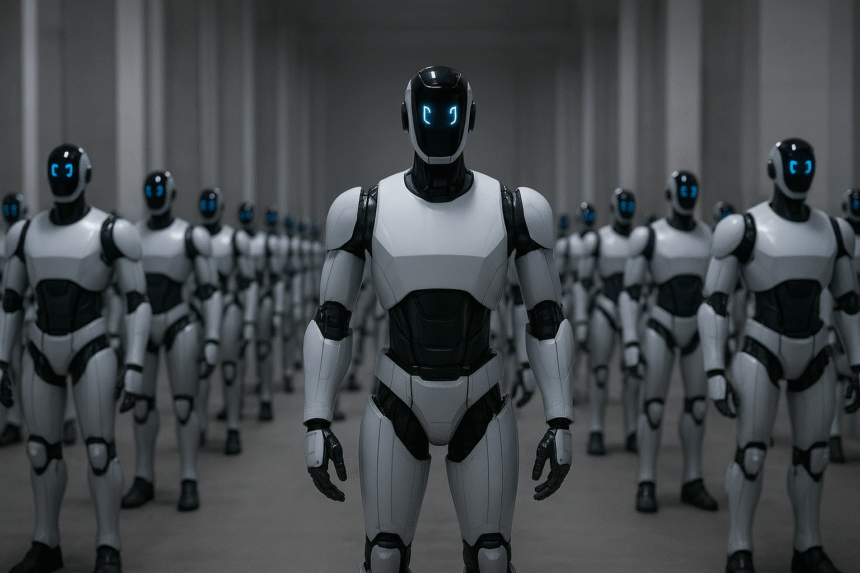
The robots displayed in prototypes resemble modern humanoid machines capable of marching, forming formations, and performing controlled actions with precision.
While China has not released full technical specifications, experts believe these machines may be similar to or even more advanced than those developed by global robotics companies like Boston Dynamics.
Concerns and Global Reactions
China’s decision has sparked heated discussions worldwide. Several international defence analysts have expressed concerns regarding:
Ethical Implications
Deploying humanoid robots in security roles raises questions about:
- AI decision-making
- Potential misuse
- Privacy concerns
- Autonomous use of force
Geopolitical Impact
Neighboring nations and Western countries perceive this technological leap as:
- A sign of China’s growing defence ambition
- A shift in global military power dynamics
- A potential trigger for an “AI Arms Race”
Top international outlets including The Guardian and Al Jazeera have highlighted the uncertainty surrounding autonomous military systems.
Will Robo-Soldiers Replace Humans?
According to Chinese officials, the robots are meant to assist, not replace, human personnel. However, many experts believe this large-scale deployment could be the beginning of a gradual transition where robotic units handle:
- High-risk patrolling
- Surveillance
- Data collection
- Emergency response
- Combat-zone assistance
This shift could eventually redefine the structure of national defence forces.
Impact on Global Security and Technology
China’s move is expected to influence multiple global areas:
1. Increased International Robotics Investment
Countries like the U.S., Japan, South Korea, and Russia may accelerate developments in robotic warfare systems.
2. New Defence Policies and AI Regulations
Global organizations may push harder for:
- International AI military regulations
- Ethical guidelines
- Non-autonomous combat rules
3. Boost to China’s Technology Export Industry
China currently exports drones, surveillance technology, and AI solutions to numerous nations. Robo-soldiers may soon join that list, expanding China’s influence in the global tech market.
China’s Vision for a Robotic Future
China has made long-term plans to integrate robotics into:
- Defence
- Manufacturing
- Healthcare
- Disaster management
- Public administration
This deployment aligns with China’s “Made in China 2025” strategy – which focuses heavily on robotics, automation, and high-tech innovation.
For more global updates, explore our World News section.
You may place these as references or contextual links inside the blog:
Conclusion
China’s decision to deploy 500 humanoid robots is more than just technological progress – it represents a bold step toward redefining national security in the AI era. As countries watch closely, the development could shape the future of defence systems worldwide.
While the debate continues about the ethics and impact of robotic soldiers, one thing is clear: the future of global defence will be deeply intertwined with artificial intelligence, automation, and robotics.
China has not just taken a step forward – it has taken a giant leap.